Cookies are a favourite sweet treat in many countries, but the word used for them can change significantly from one language to another. If you are learning a language, travelling, reading international recipes, or simply curious about food vocabulary, knowing how to say cookies in different languages can be both useful and interesting.
In some countries, people use a word that directly means cookie, while others use a term closer to biscuit, sweet, or small baked cake. British English commonly uses biscuits, while American English generally uses cookies for many small, sweet baked treats.
This guide explores cookies in different languages in all languages through widely spoken and culturally diverse languages. Each entry includes the native expression, an easy English pronunciation, a short real-life example, and the English meaning of that example.
How to Say Cookies in Different Languages
The English word “cookies” does not have one universal equivalent. Languages often have their own traditional terms for baked treats, and regional differences can affect which word sounds most natural.
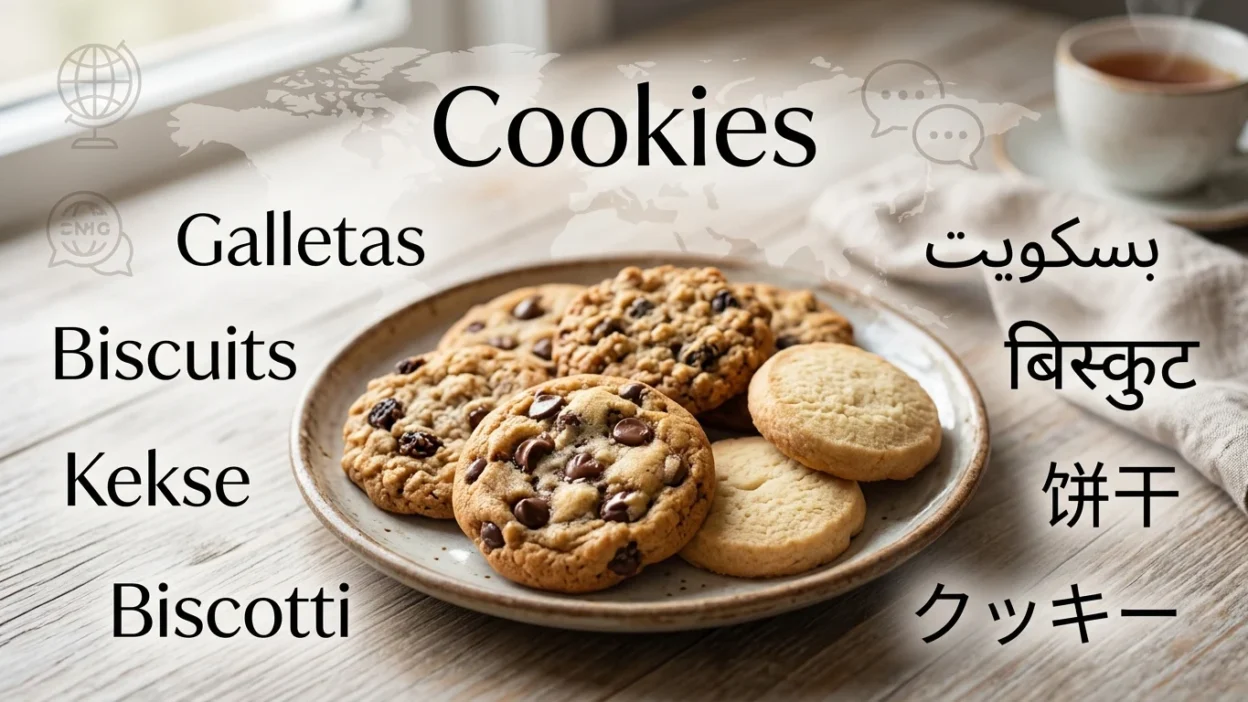
For example, Spanish commonly uses galletas, French uses biscuits, German uses Kekse, and Italian uses biscotti. These words may cover slightly different types of baked goods depending on the country and context.
The table below provides common everyday terms and useful example sentences so you can understand how cookies translations work in real conversations.
Cookies in Different Languages
| Language | Correct native phrase | Easy English pronunciation | Example sentence | English meaning |
| English | Cookies | KOO-keez | I bought some cookies. | I bought some cookies. |
| Spanish | Galletas | gah-YEH-tahs | Compré unas galletas. | I bought some cookies. |
| French | Biscuits | bee-SKWEES | J’ai acheté des biscuits. | I bought some cookies. |
| German | Kekse | KEK-seh | Ich habe Kekse gekauft. | I bought some cookies. |
| Italian | Biscotti | bee-SKOT-tee | Ho comprato dei biscotti. | I bought some cookies. |
| Portuguese | Biscoitos | bees-KOY-tohs | Comprei biscoitos. | I bought some cookies. |
| Dutch | Koekjes | KOOK-yus | Ik heb koekjes gekocht. | I bought some cookies. |
| Afrikaans | Koekies | KOO-kees | Ek het koekies gekoop. | I bought some cookies. |
| Swedish | Kakor | KAH-kor | Jag köpte kakor. | I bought some cookies. |
| Norwegian | Kjeks | sheks | Jeg kjøpte kjeks. | I bought some cookies. |
| Danish | Småkager | SMOH-kay-er | Jeg købte småkager. | I bought some cookies. |
| Finnish | Keksit | KEK-sit | Ostin keksejä. | I bought some cookies. |
| Estonian | Küpsised | KURP-see-sed | Ostsin küpsiseid. | I bought some cookies. |
| Latvian | Cepumi | TSEH-poo-mee | Es nopirku cepumus. | I bought some cookies. |
| Lithuanian | Sausainiai | sow-SINE-eye | Nusipirkau sausainių. | I bought some cookies. |
| Polish | Ciastka | CHYAST-kah | Kupiłem ciastka. | I bought some cookies. |
| Czech | Sušenky | SOO-shen-kee | Koupil jsem sušenky. | I bought some cookies. |
| Slovak | Sušienky | SOO-shyen-kee | Kúpil som sušienky. | I bought some cookies. |
| Slovenian | Piškoti | PISH-koh-tee | Kupil sem piškote. | I bought some cookies. |
| Croatian | Keksi | KEK-see | Kupio sam kekse. | I bought some cookies. |
| Serbian | Keksi | KEK-see | Купио сам кексе. | I bought some cookies. |
| Bosnian | Keksi | KEK-see | Kupio sam kekse. | I bought some cookies. |
| Bulgarian | Бисквити | bees-KVEE-tee | Купих бисквити. | I bought some biscuits. |
| Macedonian | Бисквити | bees-KVEE-tee | Купив бисквити. | I bought some biscuits. |
| Russian | Печенье | peh-CHEN-yeh | Я купил печенье. | I bought some cookies. |
| Ukrainian | Печиво | peh-CHEE-voh | Я купив печиво. | I bought some cookies. |
| Belarusian | Печыва | peh-CHY-vah | Я купіў печыва. | I bought some cookies. |
| Greek | Μπισκότα | bee-SKOH-tah | Αγόρασα μπισκότα. | I bought some cookies. |
| Albanian | Biskota | bees-KOH-tah | Bleva biskota. | I bought some cookies. |
| Romanian | Biscuiți | bees-KWITS | Am cumpărat biscuiți. | I bought some biscuits. |
| Hungarian | Kekszek | KEK-sek | Vettem kekszet. | I bought some cookies. |
| Turkish | Kurabiyeler | koo-rah-bee-YEH-ler | Kurabiye aldım. | I bought cookies. |
| Azerbaijani | Peçenyelər | peh-chen-yeh-LER | Peçenyelər aldım. | I bought cookies. |
| Georgian | ნამცხვრები | nam-TSKHV-reh-bee | ნამცხვრები ვიყიდე. | I bought some cookies. |
| Armenian | Թխվածքաբլիթներ | tkh-vats-kah-BLEET-ner | Թխվածքաբլիթներ գնեցի։ | I bought some cookies. |
| Persian | کلوچه | koo-LOH-cheh | چند کلوچه خریدم. | I bought some cookies. |
| Urdu | بسکٹ | BUS-kit | میں نے بسکٹ خریدے۔ | I bought some biscuits. |
| Hindi | बिस्कुट | BIS-kut | मैंने बिस्कुट खरीदे। | I bought some biscuits. |
| Bengali | বিস্কুট | BIS-koot | আমি বিস্কুট কিনেছি। | I bought some biscuits. |
| Punjabi | ਬਿਸਕੁਟ | BIS-kut | ਮੈਂ ਬਿਸਕੁਟ ਖਰੀਦੇ। | I bought some biscuits. |
| Gujarati | બિસ્કિટ | BIS-kit | મેં બિસ્કિટ ખરીદ્યા. | I bought some biscuits. |
| Marathi | बिस्किट | BIS-kit | मी बिस्किटे विकत घेतली. | I bought some biscuits. |
| Nepali | बिस्कुट | BIS-kut | मैले बिस्कुट किनें। | I bought some biscuits. |
| Sinhala | බිස්කට් | BIS-kat | මම බිස්කට් මිලදී ගත්තා. | I bought some biscuits. |
| Tamil | பிஸ்கட் | BIS-kit | நான் பிஸ்கட் வாங்கினேன். | I bought some biscuits. |
| Telugu | బిస్కెట్లు | bis-KEHT-loo | నేను బిస్కెట్లు కొన్నాను. | I bought some biscuits. |
| Kannada | ಬಿಸ್ಕತ್ತುಗಳು | bis-kat-too-gah-loo | ನಾನು ಬಿಸ್ಕತ್ತುಗಳನ್ನು ಖರೀದಿಸಿದೆ. | I bought some biscuits. |
| Malayalam | ബിസ്കറ്റ് | BIS-kit | ഞാൻ ബിസ്കറ്റ് വാങ്ങി. | I bought some biscuits. |
| Odia | ବିସ୍କୁଟ | BIS-kut | ମୁଁ ବିସ୍କୁଟ କିଣିଲି। | I bought some biscuits. |
| Assamese | বিস্কুট | BIS-koot | মই বিস্কুট কিনিলোঁ। | I bought some biscuits. |
| Mandarin Chinese | 饼干 | BING-gan | 我买了一些饼干。 | I bought some cookies. |
| Japanese | クッキー | KUK-kee | クッキーを買いました。 | I bought some cookies. |
| Korean | 쿠키 | KOO-kee | 쿠키를 샀어요. | I bought some cookies. |
| Vietnamese | Bánh quy | ban kwee | Tôi mua bánh quy. | I bought some cookies. |
| Thai | คุกกี้ | kook-GEE | ฉันซื้อคุกกี้ | I bought some cookies. |
| Indonesian | Kue kering | koo-eh kuh-RING | Saya membeli kue kering. | I bought some cookies. |
| Malay | Biskut | BIS-koot | Saya membeli biskut. | I bought some biscuits. |
| Filipino | Biskwit | BIS-kwit | Bumili ako ng biskwit. | I bought some biscuits. |
| Khmer | ខូគី | koh-KEE | ខ្ញុំបានទិញខូគី។ | I bought some cookies. |
| Lao | ຄຸກກີ້ | kook-GEE | ຂ້ອຍຊື້ຄຸກກີ້. | I bought some cookies. |
| Burmese | ကွတ်ကီး | kwut-KEE | ကွတ်ကီးတွေ ဝယ်ခဲ့တယ်။ | I bought some cookies. |
| Mongolian | Жигнэмэг | jig-neh-MEG | Би жигнэмэг авсан. | I bought some cookies. |
| Kazakh | Печенье | peh-CHEN-yeh | Мен печенье сатып алдым. | I bought some cookies. |
| Kyrgyz | Печенье | peh-CHEN-yeh | Мен печенье сатып алдым. | I bought some cookies. |
| Uzbek | Pechenye | peh-chen-YEH | Men pechenye sotib oldim. | I bought some cookies. |
| Tajik | Кулчақанд | kool-cha-KAND | Ман кулчақанд харидам. | I bought some cookies. |
| Turkmen | Köke | KUR-keh | Men köke satyn aldym. | I bought some cookies. |
| Arabic | بسكويت | bas-KWEET | اشتريت بعض البسكويت. | I bought some biscuits. |
| Hebrew | עוגיות | oo-gee-YOT | קניתי עוגיות. | I bought some cookies. |
| Swahili | Biskuti | bees-KOO-tee | Nimenunua biskuti. | I bought some biscuits. |
| Amharic | ብስኩት | bis-KOOT | ብስኩት ገዛሁ። | I bought some biscuits. |
| Somali | Buskud | boos-KOOD | Waxaan iibsaday buskud. | I bought some biscuits. |
| Zulu | Amabhisikidi | ah-mah-bee-see-KEE-dee | Ngithenge amabhisikidi. | I bought some biscuits. |
| Xhosa | Iibhiskithi | ee-bees-KEE-tee | Ndithenge iibhiskithi. | I bought some biscuits. |
| Malagasy | Biskoitra | bees-KOY-trah | Nividy biskoitra aho. | I bought some biscuits. |
| Māori | Pihikete | pee-hee-KEH-teh | I hokona e au ngā pihikete. | I bought some cookies. |
Cookies Around the World
Cookies are found in countless forms across different cultures. Some are soft and chewy, while others are crisp, buttery, filled, spiced, or decorated for special occasions.
Although the English word “cookie” is familiar internationally, many countries have their own traditional baked treats. The names can tell us something about local food culture and history.
For example, French-speaking regions commonly use biscuit, while German-speaking regions commonly use Keks or related forms. In parts of South Asia, words derived from “biscuit” are widely used in everyday speech.
Cookies vs Biscuits: What Is the Difference?
One of the most interesting differences in English is the use of cookie and biscuit.
In American English, “cookie” commonly refers to a small, sweet baked item, while “biscuit” usually means a soft, savoury or slightly sweet baked bread-like item.
In British English, “biscuit” is the usual everyday word for many crisp baked treats that Americans call cookies.
This means that when researching how to say cookies in different languages, it is important to remember that translations do not always correspond perfectly to one English category.
Why Learn Cookies in Different Languages?
Food vocabulary is practical for travellers, students, and anyone interested in other cultures. Cookies and biscuits are common enough that you may encounter the word on menus, supermarket shelves, recipes, packaging, and conversations.
Learning cookies in different languages around the world can also make it easier to recognise related vocabulary. Once you know a few food words, you can begin building complete sentences about what you like to eat, buy, or prepare.
How to Use Cookie Translations in Everyday Conversation
The easiest way to remember a new word is to use it in context.
Instead of memorising the word alone, practise it in a simple sentence such as “I bought some cookies” or “These cookies are delicious.”
You can also practise questions such as “Do you want a cookie?” or “Where are the cookies?” This makes the vocabulary more useful in real conversations.
When speaking with native speakers, remember that regional vocabulary can differ. A word that is common in one country may sound unusual in another.
Tips for Learning Food Words in Different Languages
Learn the Native Spelling
Seeing the word in its original writing system helps you recognise it when reading menus, labels, and recipes.
Practise Pronunciation
The pronunciation column provides a simple starting point. For accurate speaking, listen to native speakers and pay attention to sounds that do not exist in English.
Use Short Sentences
Short sentences are easier to remember. Practise the new word in a sentence rather than memorising an isolated translation.
Learn Regional Differences
A language can have several words for similar foods. Understanding regional usage can prevent confusion when travelling.
Conclusion
Learning cookies in different languages is a fun and practical way to expand your food vocabulary. From galletas in Spanish and biscuits in French to 饼干 in Mandarin Chinese and クッキー in Japanese, the same familiar treat has many different names around the world.
These 70 cookies translations provide a useful starting point for language learners, travellers, food enthusiasts, and anyone curious about international vocabulary.
FAQs
1. How do you say “cookies” in different languages?
The word changes from language to language. For example, Spanish uses galletas, French uses biscuits, German uses Kekse, Italian uses biscotti, and Mandarin Chinese uses 饼干.
2. What is “cookies” in all languages?
There is no single universal translation for cookies. Different languages may use words meaning cookies, biscuits, or specific types of baked treats. This article provides 70 common expressions from around the world.
3. How do you say “cookie” in British English?
In British English, biscuit is generally the everyday term for the type of crisp, sweet baked food that Americans commonly call a cookie. However, “cookie” is also understood and is used for certain types of biscuits.
4. Are cookies called biscuits in other countries?
Yes. Many languages use words that are closer in meaning to “biscuit”, while others have specific words for cookies. The distinction can depend on local food traditions and the type of baked product being discussed.
5. Why are cookie translations different around the world?
Languages develop their own vocabulary based on local culture, history, food traditions, and contact with other languages. As a result, similar foods can have completely different names in different parts of the world.