Grandmothers hold a special place in families around the world. They are often known for their love, wisdom, kindness, comforting hugs, and unforgettable stories. Although the word grandma differs from one language to another, it expresses the same affection and respect for an important family member.
If you want to learn how to say grandma in different languages, this guide brings together languages with native words, easy English pronunciations, real-life example sentences, and their English meanings. Whether you are learning a new language, exploring family traditions, travelling abroad, or looking for a sweet name for your grandmother, these translations will help you discover how people address grandmothers around the world.
From abuela in Spanish and grand-mère in French to dadi in Hindi and obaasan in Japanese, each language has its own way of expressing this beautiful family relationship.
Grandma in Different Languages: Quick Overview
The word grandma is an affectionate, informal term for a grandmother. Some languages have separate words for a mother’s mother and a father’s mother, while others use one common word for both.
Here are some popular translations:
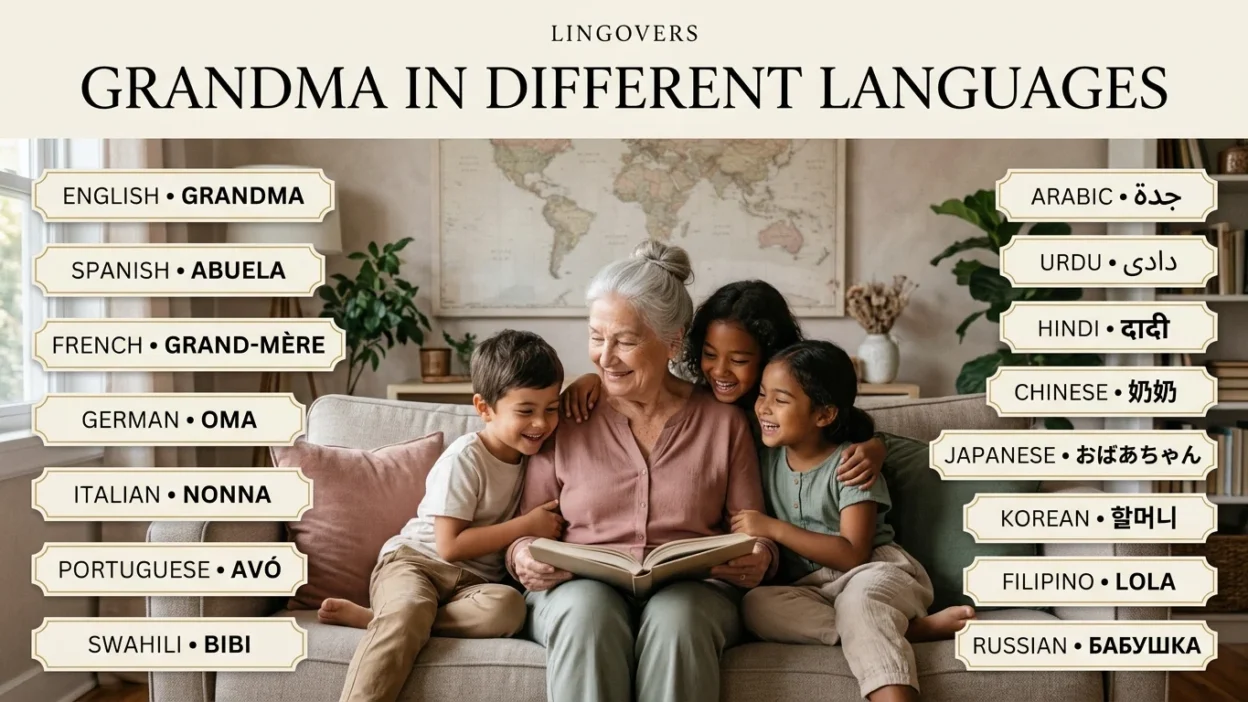
- Spanish: Abuela
- French: Grand-mère
- German: Oma
- Italian: Nonna
- Portuguese: Avó
- Arabic: جدة
- Hindi: दादी or नानी
- Urdu: دادی or نانی
- Chinese: 奶奶 or 外婆
- Japanese: おばあちゃん
- Korean: 할머니
The exact word you choose may depend on which side of the family your grandmother belongs to, regional customs, and personal family preferences.
Grandma in Different Languages
| Language | Native word | Easy English pronunciation | Example sentence | English meaning |
| Spanish | Abuela | ah-BWEH-lah | Mi abuela hace un pastel. | My grandma makes a cake. |
| French | Grand-mère | grahn-MEHR | Ma grand-mère raconte des histoires. | My grandma tells stories. |
| German | Oma | OH-mah | Meine Oma kocht sehr gut. | My grandma cooks very well. |
| Italian | Nonna | NON-nah | Mia nonna vive en Roma. | My grandma lives in Rome. |
| Portuguese | Avó | ah-VOH | Minha avó faz pão. | My grandma makes bread. |
| Dutch | Oma | OH-mah | Mijn oma houdt van bloemen. | My grandma loves flowers. |
| Swedish | Mormor / Farmor | MOOR-moor / FAR-moor | Min mormor bor nära oss. | My maternal grandma lives near us. |
| Norwegian | Bestemor | BES-teh-moor | Bestemor baker kaker. | Grandma bakes cakes. |
| Danish | Bedstemor | BED-steh-mor | Min bedstemor læser en bog. | My grandma reads a book. |
| Icelandic | Amma | AHM-mah | Amma bakar brauð. | Grandma bakes bread. |
| Finnish | Isoäiti | EE-soh-eh-tee | Isoäiti kertoo tarinoita. | Grandma tells stories. |
| Estonian | Vanaema | VAH-nah-eh-mah | Vanaema kasvatab lilli. | Grandma grows flowers. |
| Latvian | Vecmāmiņa | vets-MAA-mee-nya | Vecmāmiņa tekee kakkua. | Grandma makes a cake. |
| Lithuanian | Močiutė | moh-CHOO-teh | Močiutė gyvena kaime. | Grandma lives in the countryside. |
| Polish | Babcia | BAHB-chah | Babcia piecze ciasto. | Grandma bakes a cake. |
| Czech | Babička | BAH-beech-kah | Babička čte knihu. | Grandma reads a book. |
| Slovak | Stará mama | STAH-rah MAH-mah | Stará mama varí polievku. | Grandma cooks soup. |
| Slovenian | Babica | bah-BEE-tsah | Babica pripoveduje zgodbe. | Grandma tells stories. |
| Croatian | Baka | BAH-kah | Moja baka pravi kolače. | My grandma makes cakes. |
| Serbian | Бака | BAH-kah | Моја бака прави колаче. | My grandma makes cakes. |
| Bosnian | Nana | NAH-nah | Moja nana voli cvijeće. | My grandma loves flowers. |
| Bulgarian | Баба | BAH-bah | Баба прави баница. | Grandma makes a traditional pastry. |
| Macedonian | Баба | BAH-bah | Баба чита книга. | Grandma reads a book. |
| Russian | Бабушка | BAH-boosh-kah | Бабушка печёт пирог. | Grandma bakes a pie. |
| Ukrainian | Бабуся | BAH-boo-syah | Бабуся розповідає казки. | Grandma tells fairy tales. |
| Belarusian | Бабуля | BAH-boo-lyah | Бабуля гатуе абед. | Grandma prepares lunch. |
| Greek | Γιαγιά | yah-YAH | Η γιαγιά φτιάχνει φαγητό. | Grandma prepares food. |
| Albanian | Gjyshe | GYOO-sheh | Gjyshe lexon një libër. | Grandma reads a book. |
| Romanian | Bunică | boo-NEE-kah | Bunica face prăjituri. | Grandma makes pastries. |
| Hungarian | Nagymama | NAHD-y-mah-mah | A nagymama mesét olvas. | Grandma reads a story. |
| Turkish | Büyükanne | byoo-yook-AHN-neh | Büyükannem yemek yapıyor. | My grandma is cooking. |
| Arabic | جدة | JAD-dah | جدتي تحب الزهور. | My grandma loves flowers. |
| Hebrew | סבתא | sav-TAH | סבתא מכינה עוגה. | Grandma makes a cake. |
| Persian | مادربزرگ | maa-dar-bo-zorg | مادربزرگ برای ما غذا میپزد. | Grandma cooks food for us. |
| Urdu | دادی / نانی | DAA-dee / NAA-nee | میری نانی کہانیاں سناتی ہیں۔ | My maternal grandma tells stories. |
| Hindi | दादी / नानी | DAA-dee / NAA-nee | मेरी दादी खाना बनाती हैं। | My paternal grandma cooks food. |
| Bengali | দিদা / ঠাকুমা | DEE-dah / THAH-koo-mah | আমার দিদা গল্প বলেন। | My grandma tells stories. |
| Punjabi | ਦਾਦੀ / ਨਾਨੀ | DAA-dee / NAA-nee | ਮੇਰੀ ਨਾਨੀ ਕਹਾਣੀਆਂ ਸੁਣਾਉਂਦੀ ਹੈ। | My maternal grandma tells stories. |
| Gujarati | દાદી / નાની | DAA-dee / NAA-nee | મારી દાદી વાર્તા કહે છે. | My paternal grandma tells a story. |
| Marathi | आजी | AA-jee | माझी आजी गोड पदार्थ बनवते. | My grandma makes sweets. |
| Nepali | हजुरआमा | ha-joo-RAH-maa | मेरी हजुरआमा कथा सुनाउनुहुन्छ। | My grandma tells stories. |
| Sinhala | ආච්චි | AACH-chee | ආච්චි කෑම හදනවා. | Grandma makes food. |
| Tamil | பாட்டி | PAA-tee | என் பாட்டி கதை சொல்கிறார். | My grandma tells a story. |
| Telugu | అమ్మమ్మ / నాయనమ్మ | am-MAM-mah / naa-ya-NAM-mah | మా అమ్మమ్మ కథలు చెబుతుంది. | My maternal grandma tells stories. |
| Kannada | ಅಜ್ಜಿ | AJ-jee | ನನ್ನ ಅಜ್ಜಿ ಕಥೆ ಹೇಳುತ್ತಾರೆ. | My grandma tells a story. |
| Malayalam | അമ്മൂമ്മ | am-MOO-mah | എന്റെ അമ്മൂമ്മ കഥ പറയുന്നു. | My grandma tells a story. |
| Thai | ยาย / ย่า | yaai / yaa | ยายทำอาหารอร่อย | Grandma cooks delicious food. |
| Vietnamese | Bà | Bah | Bà kể chuyện cho tôi nghe. | Grandma tells me stories. |
| Indonesian | Nenek | NEH-nek | Nenek membuat kue. | Grandma makes a cake. |
| Malay | Nenek | NEH-nek | Nenek suka berkebun. | Grandma enjoys gardening. |
| Filipino | Lola | LOH-lah | Si Lola ay nagluluto. | Grandma is cooking. |
| Chinese (Mandarin) | 奶奶 / 外婆 | nai-nai / wai-po | 奶奶给我讲故事。 | My paternal grandma tells me stories. |
| Japanese | おばあちゃん | oh-baa-chan | おばあちゃんは料理が上手です。 | Grandma is good at cooking. |
| Korean | 할머니 | hal-MUH-nee | 할머니가 이야기를 들려주세요. | Grandma tells stories. |
| Mongolian | Эмээ | eh-MEH | Эмээ надад үлгэр ярьж өгдөг. | Grandma tells me fairy tales. |
| Kazakh | Әже | ah-ZHEH | Әжем маған ертегі айтады. | My grandma tells me fairy tales. |
| Uzbek | Buvi | boo-VEE | Buvim menga ertak aytadi. | My grandma tells me a fairy tale. |
| Azerbaijani | Nənə | neh-NEH | Nənəm mənə nağıl danışır. | My grandma tells me a fairy tale. |
| Armenian | Տատիկ | tah-TEEK | Տատիկը հեքիաթ է պատմում։ | Grandma tells a fairy tale. |
| Georgian | ბებია | beh-BEE-ah | ბებია ზღაპარს მიყვება. | Grandma tells me a fairy tale. |
| Swahili | Bibi | BEE-bee | Bibi anapika chakula. | Grandma is cooking food. |
| Zulu | Ugogo | oo-GOH-goh | Ugogo upheka ukudla. | Grandma cooks food. |
| Afrikaans | Ouma | OO-mah | Ouma bak koekies. | Grandma bakes biscuits. |
| Yoruba | Ìyá àgbà | ee-YAH ahg-BAH | Ìyá àgbà ń sọ ìtàn. | Grandma tells a story. |
| Igbo | Nne ochie | neh oh-CHEE-eh | Nne ochie na-akọ akụkọ. | Grandma tells a story. |
| Amharic | አያት | ah-YAHT | አያቴ ታሪክ ትነግረኛለች። | My grandma tells me a story. |
| Irish | Seanmháthair | shan-WAH-hir | Tá mo sheanmháthair sa bhaile. | My grandma is at home. |
| Welsh | Nain | Nine | Mae fy nain yn coginio. | My grandma is cooking. |
| Scottish Gaelic | Seanmhair | SHEN-uh-var | Tha mo sheanmhair aig an taigh. | My grandma is at home. |
How to Say Grandma in Different Languages
Learning how to say grandma in different languages is a wonderful way to explore family vocabulary and cultural traditions. Although some languages use a single familiar word, others distinguish between grandmothers on the mother’s and father’s sides.
For example, Spanish speakers commonly say abuela, while French speakers use grand-mère. In German and Dutch, Oma is a familiar everyday term. Italian families often use nonna, and Filipino families commonly say lola.
In South Asia, the words can be more specific. Hindi and Urdu commonly use dadi for a paternal grandmother and nani for a maternal grandmother. Mandarin Chinese also distinguishes between the two: nǎinai generally refers to the father’s mother, while wàipó refers to the mother’s mother.
These differences show how family relationships influence vocabulary.
Grandma Translations Around the World
Grandma translations reflect more than language. They also reveal how families express affection, respect, and belonging.
In many European languages, traditional words for grandmother have become familiar terms of affection. In South Asia, separate words often help identify which side of the family a grandmother belongs to. In other cultures, children may use a formal term, a shortened nickname, or a name unique to their family.
There is no single correct name that every family must use. The best term is one that feels natural, respectful, and meaningful to the grandmother and her family.
What Is the Difference Between Grandma and Grandmother?
The words grandma and grandmother refer to the same family relationship, but they differ in tone.
Grandmother is the more formal and standard term. It is common in official documents, family histories, and formal writing.
Grandma is warmer and more informal. It is widely used in everyday conversation, personal letters, family stories, and affectionate messages.
Other languages have similar distinctions between formal and familiar terms. For example, French grand-mère is a standard term, while mamie is a familiar affectionate alternative. In German, Großmutter is more formal, while Oma is commonly used in daily life.
Why Do Some Languages Have Two Words for Grandma?
Some languages distinguish between a paternal grandmother, who is the father’s mother, and a maternal grandmother, who is the mother’s mother.
This distinction can help speakers communicate family relationships precisely. In Hindi and Urdu, dadi refers to the paternal grandmother, while nani refers to the maternal grandmother. Mandarin Chinese uses nǎinai and wàipó for the same distinction.
Other languages, including Spanish and French, generally use one main word for grandmother regardless of which parent is related to her.
Regional customs and family habits may introduce additional nicknames or affectionate variations.
Sweet and Affectionate Names for Grandma
Many families prefer a short, affectionate name instead of a formal translation of grandmother.
Here are some popular options:
- Oma: A familiar German and Dutch term.
- Nonna: A warm Italian family name.
- Abuela: A common Spanish term for grandmother.
- Nana: An affectionate English family name, also used in some other communities.
- Lola: A familiar Filipino term.
- Nenek: A common Indonesian and Malay word for grandmother.
- Bibi: A Swahili term for grandmother.
- Ouma: A familiar Afrikaans word.
The right name depends on family tradition, pronunciation, and personal preference. Some families even create their own special names that are not found in dictionaries.
How to Learn Grandma in Different Languages Easily
Memorising 70 translations may seem challenging, but a few simple techniques can make the process easier.
Group similar words together. Start with words such as Oma, Nonna, Abuela, and Lola. Practising them together helps you recognise familiar sounds.
Learn the family distinction. For languages with separate maternal and paternal terms, connect each word with the correct side of the family.
Practise with sentences. Rather than learning a word alone, read example sentences aloud. This helps you understand how the word works in everyday conversation.
Listen to native speakers. English pronunciation guides are useful starting points, but listening to native speakers will help you recognise sounds, stress, and regional differences.
Connect each word with a memory. If you know someone who speaks another language, associate the translation with that person or a family story. Personal connections can make vocabulary easier to remember.
Conclusion
The word grandma has many beautiful forms around the world, including abuela, nonna, Oma, lola, dadi, and nani. Each language expresses the special bond between a grandmother and her family in its own way.
Learning grandma in different languages can help you expand your vocabulary, appreciate cultural traditions, and find an affectionate name for someone special. Use the 70-language table to explore these translations, practise the pronunciations, and discover which word best fits your family’s traditions.
FAQs
1. How do you say grandma in different languages?
Some common translations are abuela in Spanish, grand-mère in French, Oma in German, nonna in Italian, avó in Portuguese, lola in Filipino, and nenek in Indonesian and Malay.
2. What is the most popular word for grandma around the world?
There is no single word that is most popular in every country. Terms such as Oma, Nonna, Abuela, Nana, and Lola are familiar in different language communities and families.
3. What is grandma called in Hindi and Urdu?
In Hindi and Urdu, dadi generally means paternal grandmother, while nani means maternal grandmother. The exact pronunciation and preferred family nickname may vary by region.
4. What is the difference between Oma, Nonna, and Abuela?
Oma is commonly used in German and Dutch, Nonna is Italian, and Abuela is Spanish. All three can mean grandmother or grandma, although family usage and affectionate variations differ.
5. How do you say grandma in Japanese and Chinese?
In Japanese, おばあちゃん (obaachan) is a common affectionate term for grandma. In Mandarin Chinese, 奶奶 (nǎinai) generally means paternal grandma, while 外婆 (wàipó) generally means maternal grandma.