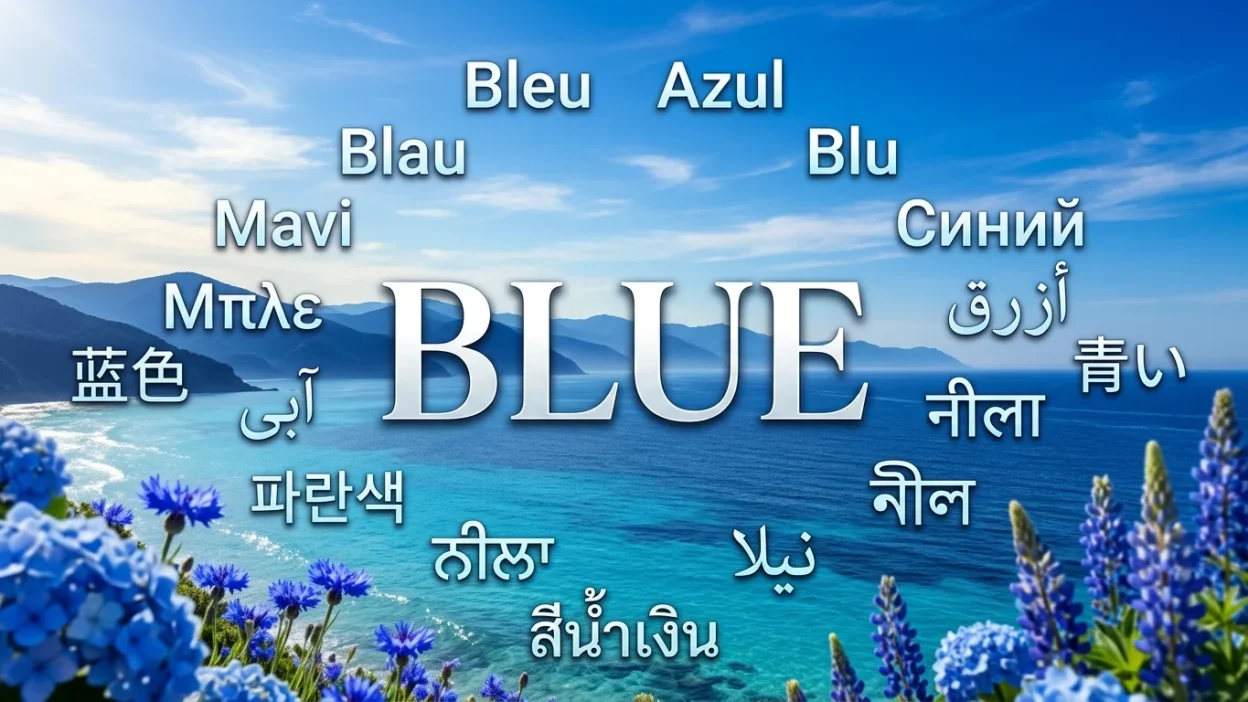
Blue is one of the most recognisable colours in the world. It reminds us of the sky, oceans, peaceful places, and beautiful natural scenery. However, the word for blue changes from one language to another, and some languages use different words depending on the shade or context.
If you want to learn how to say blue in different languages, this guide brings together 70 translations, easy English pronunciations, and simple example sentences. It is useful for language learners, travellers, students, writers, and anyone curious about colour vocabulary.
Blue in Different Languages
| Language | Native word for Blue | Easy pronunciation | Example sentence | English meaning |
| English | Blue | bloo | The sky is blue. | The sky is blue. |
| Spanish | Azul | ah-SOOL | El cielo es azul. | The sky is blue. |
| French | Bleu / Bleue | bluh | La mer est bleue. | The sea is blue. |
| German | Blau | blow | Der Himmel ist blau. | The sky is blue. |
| Italian | Blu | bloo | Il mare è blu. | The sea is blue. |
| Portuguese | Azul | ah-ZOOL | O céu está azul. | The sky is blue. |
| Dutch | Blauw | blouw | De lucht is blauw. | The sky is blue. |
| Russian | Синий | SEE-neey | Небо синее. | The sky is blue. |
| Ukrainian | Синій | SEE-neey | Небо синє. | The sky is blue. |
| Polish | Niebieski | nyeh-BYES-kee | Niebo jest niebieskie. | The sky is blue. |
| Czech | Modrý | MOH-dree | Moře je modré. | The sea is blue. |
| Slovak | Modrý | MOH-dree | Obloha je modrá. | The sky is blue. |
| Slovenian | Moder | MOH-der | Morje je modro. | The sea is blue. |
| Croatian | Plav | plahv | More je plavo. | The sea is blue. |
| Serbian | Плав | plahv | Небо је плаво. | The sky is blue. |
| Bulgarian | Син | seen | Небето е синьо. | The sky is blue. |
| Romanian | Albastru | ahl-BAHS-troo | Cerul este albastru. | The sky is blue. |
| Hungarian | Kék | kayk | Az ég kék. | The sky is blue. |
| Greek | Μπλε | bleh | Ο ουρανός είναι μπλε. | The sky is blue. |
| Turkish | Mavi | mah-VEE | Gökyüzü mavi. | The sky is blue. |
| Arabic | أزرق | AZ-rak | البحر أزرق. | The sea is blue. |
| Hebrew | כחול | kah-KHOHL | הים כחול. | The sea is blue. |
| Persian | آبی | ah-BEE | آسمان آبی است. | The sky is blue. |
| Urdu | نیلا | NEE-lah | آسمان نیلا ہے۔ | The sky is blue. |
| Hindi | नीला | NEE-lah | आसमान नीला है। | The sky is blue. |
| Bengali | নীল | neel | আকাশ নীল। | The sky is blue. |
| Punjabi | ਨੀਲਾ | NEE-lah | ਅਸਮਾਨ ਨੀਲਾ ਹੈ। | The sky is blue. |
| Gujarati | વાદળી | vaad-LEE | આકાશ વાદળી છે. | The sky is blue. |
| Marathi | निळा | nee-LAA | आकाश निळे आहे. | The sky is blue. |
| Nepali | नीलो | NEE-loh | आकाश नीलो छ। | The sky is blue. |
| Sinhala | නිල් | neel | අහස නිල් පාටයි. | The sky is blue. |
| Tamil | நீலம் | NEE-lam | வானம் நீலமாக உள்ளது. | The sky is blue. |
| Telugu | నీలం | NEE-lam | ఆకాశం నీలంగా ఉంది. | The sky is blue. |
| Kannada | ನೀಲಿ | NEE-lee | ಆಕಾಶ ನೀಲಿಯಾಗಿದೆ. | The sky is blue. |
| Malayalam | നീല | NEE-lah | ആകാശം നീലയാണ്. | The sky is blue. |
| Chinese (Mandarin) | 蓝色 | lán sè | 天空是蓝色的。 | The sky is blue. |
| Japanese | 青い | aoi | 空が青いです。 | The sky is blue. |
| Korean | 파란색 | pa-ran-saek | 하늘은 파란색이에요. | The sky is blue. |
| Vietnamese | Xanh dương | sahng zuh-ung | Bầu trời màu xanh dương. | The sky is blue. |
| Thai | สีน้ำเงิน | see nam-ngern | ท้องฟ้าเป็นสีน้ำเงิน | The sky is blue. |
| Indonesian | Biru | BEE-roo | Langit berwarna biru. | The sky is blue. |
| Malay | Biru | BEE-roo | Langit berwarna biru. | The sky is blue. |
| Filipino (Tagalog) | Asul | ah-SOOL | Asul ang langit. | The sky is blue. |
| Burmese | အပြာ | ah-PYAH | ကောင်းကင်က အပြာရောင်ပါ။ | The sky is blue. |
| Khmer | ខៀវ | khiev | មេឃមានពណ៌ខៀវ។ | The sky is blue. |
| Lao | ສີຟ້າ | see faa | ທ້ອງຟ້າມີສີຟ້າ. | The sky is blue. |
| Mongolian | Цэнхэр | TSEN-kher | Тэнгэр цэнхэр байна. | The sky is blue. |
| Kazakh | Көк | kök | Аспан көк. | The sky is blue. |
| Uzbek | Ko‘k | kök | Osmon ko‘k. | The sky is blue. |
| Azerbaijani | Mavi | mah-VEE | Göy mavidir. | The sky is blue. |
| Armenian | Կապույտ | kah-POOYТ | Երկինքը կապույտ է։ | The sky is blue. |
| Georgian | ლურჯი | LOOR-jee | ცა ლურჯია. | The sky is blue. |
| Albanian | Blu | bloo | Qielli është blu. | The sky is blue. |
| Icelandic | Blár | blaur | Himinninn er blár. | The sky is blue. |
| Swedish | Blå | bloh | Himlen är blå. | The sky is blue. |
| Norwegian | Blå | bloh | Himmelen er blå. | The sky is blue. |
| Danish | Blå | bloh | Himlen er blå. | The sky is blue. |
| Finnish | Sininen | SEE-nee-nen | Taivas on sininen. | The sky is blue. |
| Estonian | Sinine | SEE-nee-neh | Taevas on sinine. | The sky is blue. |
| Latvian | Zils | zeels | Debesis ir zilas. | The sky is blue. |
| Lithuanian | Mėlynas | MAY-lee-nahs | Dangus yra mėlynas. | The sky is blue. |
| Irish | Gorm | gorum | Tá an spéir gorm. | The sky is blue. |
| Welsh | Glas | glahs | Mae’r awyr yn las. | The sky is blue. |
| Scottish Gaelic | Gorm | gor-um | Tha an speur gorm. | The sky is blue. |
| Basque | Urdin | OOR-deen | Zerua urdina da. | The sky is blue. |
| Catalan | Blau | blow | El cel és blau. | The sky is blue. |
| Swahili | Bluu | bloo | Anga ni bluu. | The sky is blue. |
| Afrikaans | Blou | blow | Die lug is blou. | The sky is blue. |
| Zulu | Luhlaza okwesibhakabhaka | loo-hlah-zah oh-kweh-see-bhah-kah-bhah-kah | Isibhakabhaka siluhlaza okwesibhakabhaka. | The sky is blue. |
| Yoruba | Búlúù | BOO-loo | Ọ̀run jẹ́ búlúù. | The sky is blue. |
Why Does the Word for Blue Differ Between Languages?
Languages develop through different histories, cultures, and ways of describing the world. As a result, the same colour can have very different names.
For example, Spanish uses azul, French uses bleu, and German uses blau. These words may look or sound similar, but they have their own pronunciation rules.
Some languages also use different words for lighter and darker shades of blue. Others change the word according to grammatical gender, number, or the noun being described.
How to Say Blue in Different Languages
Learning the word for blue is a useful way to build basic vocabulary. Start with a few widely spoken languages:
- Spanish: Azul
- French: Bleu
- German: Blau
- Italian: Blu
- Arabic: أزرق
- Hindi: नीला
- Urdu: نیلا
- Mandarin Chinese: 蓝色
- Japanese: 青い
- Korean: 파란색
Practise each word aloud and use it in a short sentence. For example, you can describe the sky, a shirt, a car, or the ocean.
Different Shades of Blue Around the World
Blue is not limited to one shade. Many languages distinguish between light blue, dark blue, navy blue, and other variations.
Here are some common English shade names:
| Shade | Description |
| Light blue | A pale, soft shade of blue |
| Sky blue | A bright shade resembling a clear sky |
| Navy blue | A very dark shade of blue |
| Royal blue | A rich and vivid blue |
| Turquoise | A blue-green shade |
| Baby blue | A gentle, pastel blue |
| Teal | A darker blue-green colour |
When learning colour vocabulary, remember that a direct translation may not always match the exact shade in another language.
Interesting Facts About the Colour Blue
Blue has a special place in nature, art, fashion, and everyday life.
- The sky and ocean: Blue is commonly associated with the sky and large bodies of water.
- Peace and calm: Many people connect blue with relaxation, stability, and tranquillity.
- Fashion: Blue is a popular clothing colour because it works well with many other shades.
- Flags and symbols: Blue appears in national flags and cultural symbols around the world.
- Design: Businesses often use blue in logos and websites to create a calm and trustworthy impression.
Tips for Learning Colour Words in Other Languages
Learning colour vocabulary becomes easier when you practise it in everyday situations.
- Start with familiar objects: Name blue items around your home, such as clothes, books, or furniture.
- Practise pronunciation: Read each word aloud instead of memorising its spelling alone.
- Use short sentences: Try describing the sky or the colour of an object.
- Compare similar words: Notice how languages such as Spanish, Portuguese, and Italian use different forms.
- Review regularly: Repeating a few words every day helps you remember them.
Conclusion
The word blue has many different forms around the world, from azul in Spanish to 蓝色 in Mandarin and नीला in Hindi. Although the words and pronunciations vary, they all help people describe the same familiar colour.
Use this list of 70 blue translations to expand your vocabulary, practise new languages, and discover how people communicate around the world.
FAQs
1. How do you say blue in different languages?
Blue is azul in Spanish, bleu in French, blau in German, blu in Italian, नीला in Hindi, and 蓝色 in Mandarin Chinese.
2. What is the word for blue in Spanish?
The Spanish word for blue is azul. For example, El cielo es azul means “The sky is blue.”
3. How do you say blue in Japanese?
Blue is commonly written as 青い (aoi) in Japanese. It is used to describe blue objects and colours.
4. What is blue called in Arabic?
Blue is أزرق (azraq) in Arabic. The form can change depending on the gender and grammatical context of the noun.
5. Why do different languages have different words for blue?
Languages develop independently and have different histories, sounds, and vocabulary systems. Some also distinguish between shades of blue or use different grammatical forms.