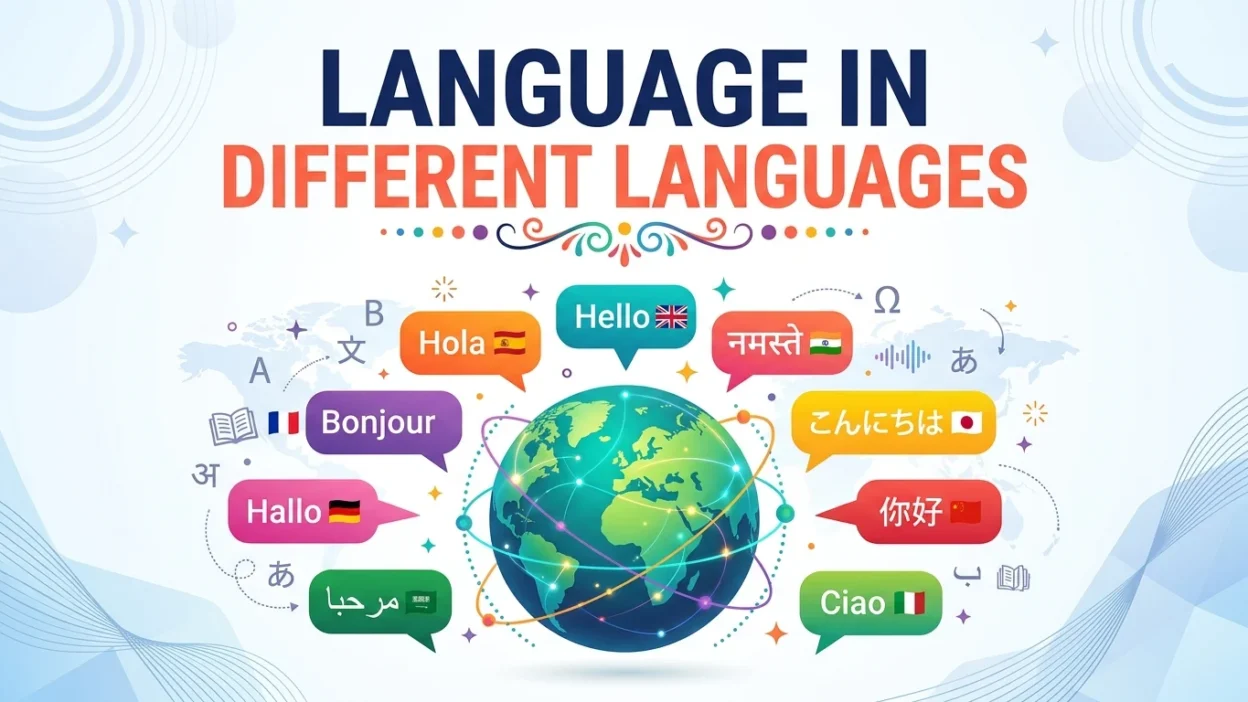
Language is one of the most important parts of human communication. It helps people express their thoughts, share ideas, understand different cultures, and connect with others around the world. Although people speak thousands of languages, the word “language” has a different name and pronunciation in each one.
If you want to learn how to say language in different languages, this guide will help you explore translations from around the world. Each translation includes the native word, an easy English pronunciation, a simple example sentence, and its English meaning.
Whether you are a language learner, student, traveler, or simply interested in different cultures, this list will help you discover how people express the word “language” around the world.
Language in Different Languages: 70 Translations
The following table contains 70 different translations of the English word “language.” You can use it to learn native expressions, understand their pronunciation, and see how they are used in everyday sentences.
| Language | Native Word | Easy English Pronunciation | Example Sentence | English Meaning |
| Spanish | Idioma | ee-DYOH-mah | Este idioma es hermoso. | This language is beautiful. |
| French | Langue | lahng | Cette langue est intéressante. | This language is interesting. |
| German | Sprache | SHPRAH-khuh | Diese Sprache ist schön. | This language is beautiful. |
| Italian | Lingua | LEEN-gwah | Questa lingua è bellissima. | This language is beautiful. |
| Portuguese | Língua | LEEN-gwah | Esta língua é importante. | This language is important. |
| Dutch | Taal | tahl | Deze taal is mooi. | This language is beautiful. |
| Russian | Язык | ya-ZEEK | Этот язык красивый. | This language is beautiful. |
| Ukrainian | Мова | MOH-vah | Ця мова красива. | This language is beautiful. |
| Polish | Język | YEN-zik | Ten język jest piękny. | This language is beautiful. |
| Czech | Jazyk | YAH-zik | Tento jazyk je krásný. | This language is beautiful. |
| Slovak | Jazyk | YAH-zik | Tento jazyk je krásny. | This language is beautiful. |
| Swedish | Språk | sprohk | Detta språk är vackert. | This language is beautiful. |
| Norwegian | Språk | sprohk | Dette språket er vakkert. | This language is beautiful. |
| Danish | Sprog | sproh | Dette sprog er smukt. | This language is beautiful. |
| Finnish | Kieli | KEE-lee | Tämä kieli on kaunis. | This language is beautiful. |
| Icelandic | Tungumál | TOONG-oo-mahl | Þetta tungumál er fallegt. | This language is beautiful. |
| Greek | Γλώσσα | GLOH-sah | Αυτή η γλώσσα είναι όμορφη. | This language is beautiful. |
| Turkish | Dil | deel | Bu dil çok güzel. | This language is very beautiful. |
| Arabic | لغة | Lughah | هذه اللغة جميلة. | This language is beautiful. |
| Persian | زبان | zabân | این زبان زیباست. | This language is beautiful. |
| Urdu | زبان | zabaan | یہ زبان خوبصورت ہے۔ | This language is beautiful. |
| Hindi | भाषा | BHAA-shaa | यह भाषा सुंदर है। | This language is beautiful. |
| Bengali | ভাষা | BHA-sha | এই ভাষা সুন্দর। | This language is beautiful. |
| Punjabi | ਭਾਸ਼ਾ | BHAA-shaa | ਇਹ ਭਾਸ਼ਾ ਸੁੰਦਰ ਹੈ। | This language is beautiful. |
| Gujarati | ભાષા | BHAA-shaa | આ ભાષા સુંદર છે. | This language is beautiful. |
| Marathi | भाषा | BHAA-shaa | ही भाषा सुंदर आहे. | This language is beautiful. |
| Nepali | भाषा | BHAA-shaa | यो भाषा सुन्दर छ। | This language is beautiful. |
| Sinhala | භාෂාව | BHA-shaa-wa | මේ භාෂාව ලස්සනයි. | This language is beautiful. |
| Tamil | மொழி | MOH-zhee | இந்த மொழி அழகானது. | This language is beautiful. |
| Telugu | భాష | BHAA-sha | ఈ భాష అందమైనది. | This language is beautiful. |
| Kannada | ಭಾಷೆ | BHAA-she | ಈ ಭಾಷೆ ಸುಂದರವಾಗಿದೆ. | This language is beautiful. |
| Malayalam | ഭാഷ | BHAA-sha | ഈ ഭാഷ മനോഹരമാണ്. | This language is beautiful. |
| Chinese (Mandarin) | 语言 | yǔ yán | 这种语言很美。 | This language is beautiful. |
| Japanese | 言語 | gen-go | この言語は美しいです。 | This language is beautiful. |
| Korean | 언어 | eo-neo | 이 언어는 아름다워요. | This language is beautiful. |
| Thai | ภาษา | phaa-sǎa | ภาษานี้สวยงาม | This language is beautiful. |
| Vietnamese | Ngôn ngữ | ngohn ngoo | Ngôn ngữ này rất đẹp. | This language is very beautiful. |
| Indonesian | Bahasa | bah-HAH-sah | Bahasa ini indah. | This language is beautiful. |
| Malay | Bahasa | bah-HAH-sah | Bahasa ini indah. | This language is beautiful. |
| Filipino (Tagalog) | Wika | WEE-kah | Maganda ang wikang ito. | This language is beautiful. |
| Burmese | ဘာသာစကား | baa-tha za-ga | ဒီဘာသာစကားက လှပတယ်။ | This language is beautiful. |
| Khmer | ភាសា | phie-saa | ភាសានេះស្រស់ស្អាត។ | This language is beautiful. |
| Lao | ພາສາ | phaa-saa | ພາສານີ້ງາມ. | This language is beautiful. |
| Mongolian | Хэл | khel | Энэ хэл сайхан. | This language is beautiful. |
| Hebrew | שפה | sah-FAH | השפה הזאת יפה. | This language is beautiful. |
| Swahili | Lugha | LOO-ghah | Lugha hii ni nzuri. | This language is beautiful. |
| Afrikaans | Taal | tahl | Hierdie taal is mooi. | This language is beautiful. |
| Zulu | Ulimi | oo-LEE-mee | Lolu limi luhle. | This language is beautiful. |
| Xhosa | Ulwimi | oo-LWEE-mee | Olu lwimi luhle. | This language is beautiful. |
| Amharic | ቋንቋ | kwan-kwa | ይህ ቋንቋ ቆንጆ ነው። | This language is beautiful. |
| Somali | Luqad | LOO-khad | Luqaddani waa qurux badan tahay. | This language is beautiful. |
| Hausa | Harshe | HAR-sheh | Wannan harshe yana da kyau. | This language is beautiful. |
| Yoruba | Èdè | eh-DEH | Èdè yìí lẹ́wà. | This language is beautiful. |
| Igbo | Asụsụ | ah-SOO-soo | Asụsụ a mara mma. | This language is beautiful. |
| Irish | Teanga | CHAN-gah | Tá an teanga seo go hálainn. | This language is beautiful. |
| Welsh | Iaith | eye-th | Mae’r iaith hon yn hardd. | This language is beautiful. |
| Scottish Gaelic | Cànan | KAA-nan | Tha an cànan seo brèagha. | This language is beautiful. |
| Basque | Hizkuntza | heez-KOON-tsah | Hizkuntza hau ederra da. | This language is beautiful. |
| Catalan | Llengua | LYENG-gwah | Aquesta llengua és bonica. | This language is beautiful. |
| Romanian | Limbă | LEEM-buh | Această limbă este frumoasă. | This language is beautiful. |
| Hungarian | Nyelv | nyelv | Ez a nyelv gyönyörű. | This language is beautiful. |
| Croatian | Jezik | YEH-zik | Ovaj jezik je lijep. | This language is beautiful. |
| Serbian | Језик | YEH-zik | Овај језик је леп. | This language is beautiful. |
| Bosnian | Jezik | YEH-zik | Ovaj jezik je lijep. | This language is beautiful. |
| Bulgarian | Език | EH-zik | Този език е красив. | This language is beautiful. |
| Albanian | Gjuhë | JOO-uh | Kjo gjuhë është e bukur. | This language is beautiful. |
| Armenian | Լեզու | leh-ZOO | Այս լեզուն գեղեցիկ է։ | This language is beautiful. |
| Georgian | ენა | EH-nah | ეს ენა ლამაზია. | This language is beautiful. |
| Estonian | Keel | kayl | See keel on ilus. | This language is beautiful. |
| Latvian | Valoda | vah-LOH-dah | Šī valoda ir skaista. | This language is beautiful. |
Why Is the Word Language Different Around the World?
Every language has its own history, grammar, pronunciation, and vocabulary. The word “language” developed differently in different cultures because of historical influences, cultural traditions, and interactions between communities.
For example, English uses the word “language,” while Spanish uses “idioma” and French uses “langue.” Similarly, Urdu and Persian use the word “zabaan,” showing a shared linguistic influence.
These differences make language translations interesting and demonstrate how people communicate across cultures.
How to Say Language in Different Languages Easily
Learning new vocabulary becomes easier when you follow a few simple steps:
- Learn the native spelling: Start by recognizing how the word is written in its original script.
- Practice pronunciation: Read the English pronunciation guide and repeat the word several times.
- Use example sentences: Understand how the word works in everyday communication.
- Compare similar words: Notice similarities between languages that share historical roots.
- Practice regularly: Review a few translations every day to improve your vocabulary.
These techniques can help you remember language in different languages without feeling overwhelmed.
How Are Language and Dialect Different?
Language and dialect are related, but they do not mean exactly the same thing.
A language is a system of communication with its own vocabulary, grammar, and structure. A dialect is a regional or social variety of a language that may have differences in pronunciation, vocabulary, and grammar.
For example, British English and American English are varieties of English with differences in spelling, pronunciation, and vocabulary.
Understanding this difference helps learners appreciate the diversity of communication around the world.
Why Is Learning Different Languages Important?
Learning different languages offers several personal, educational, and professional benefits.
Better communication: It helps you communicate with people from different countries and backgrounds.
Cultural understanding: Learning another language gives you insight into different traditions, lifestyles, and cultures.
Educational opportunities: Knowledge of foreign languages can help students access international educational resources.
Career development: Multilingual communication can be valuable in international business, tourism, education, and other professional fields.
Personal development: Learning new words and expressions improves memory, vocabulary, and communication skills.
Interesting Facts About Languages Around the World
Languages are full of fascinating differences and similarities. Here are some interesting facts:
- There are more than 7,000 living languages spoken around the world.
- Mandarin Chinese is among the languages with the largest numbers of native speakers.
- Arabic is written from right to left.
- Japanese commonly uses three writing systems: Hiragana, Katakana, and Kanji.
- English has borrowed words from many other languages.
- Some languages use tones to distinguish the meanings of words.
- Sign languages are complete natural languages with their own grammatical structures.
These facts show that languages are more than just words. They are an important part of human identity, history, and culture.
Conclusion
Learning the word “language” in different languages is a simple and enjoyable way to explore global communication. From Spanish “idioma” to Urdu “zabaan” and Japanese “言語,” every translation reflects the unique vocabulary and cultural history of its speakers.
This list of 70 language translations, native expressions, pronunciations, and example sentences provides a useful starting point for anyone interested in learning new languages. Keep practicing, explore different cultures, and enjoy discovering the beauty of languages around the world.
FAQs
1. How do you say language in different languages?
The word “language” has different translations around the world. For example, it is “idioma” in Spanish, “langue” in French, “Sprache” in German, “zabaan” in Urdu, and “bhasha” in Hindi.
2. What is the Urdu word for language?
The Urdu word for language is زبان (Zabaan). It is commonly used when discussing communication, speaking, and different languages.
3. What is the Spanish word for language?
The Spanish word for language is “idioma.” Another word, “lengua,” is also used, particularly when referring to a language or tongue.
4. Why does the word language have different translations?
The word language has different translations because every language develops its own vocabulary through history, culture, and social interaction. Some languages also share words because of historical and linguistic influences.
5. How many languages are spoken around the world?
There are more than 7,000 living languages spoken around the world. However, the exact number can vary depending on how languages and dialects are classified.