Saying goodbye is a simple part of everyday communication, but every language has its own unique way of expressing it. Whether you are leaving a friend, ending a conversation, finishing a phone call, or saying farewell to someone special, knowing how to say bye in another language can make your interactions more meaningful.
If you are looking for bye in different languages, this guide brings together translations from around the world. You will discover the correct native expressions, easy English pronunciations, and short real-life example sentences with their English meanings.
From Spanish Adiós and French Au revoir to Japanese Sayonara and German Tschüss, explore how people say goodbye across different cultures.
Whether you are travelling, learning a new language, or expanding your vocabulary, these translations will help you say bye with confidence.
Bye in Different Languages
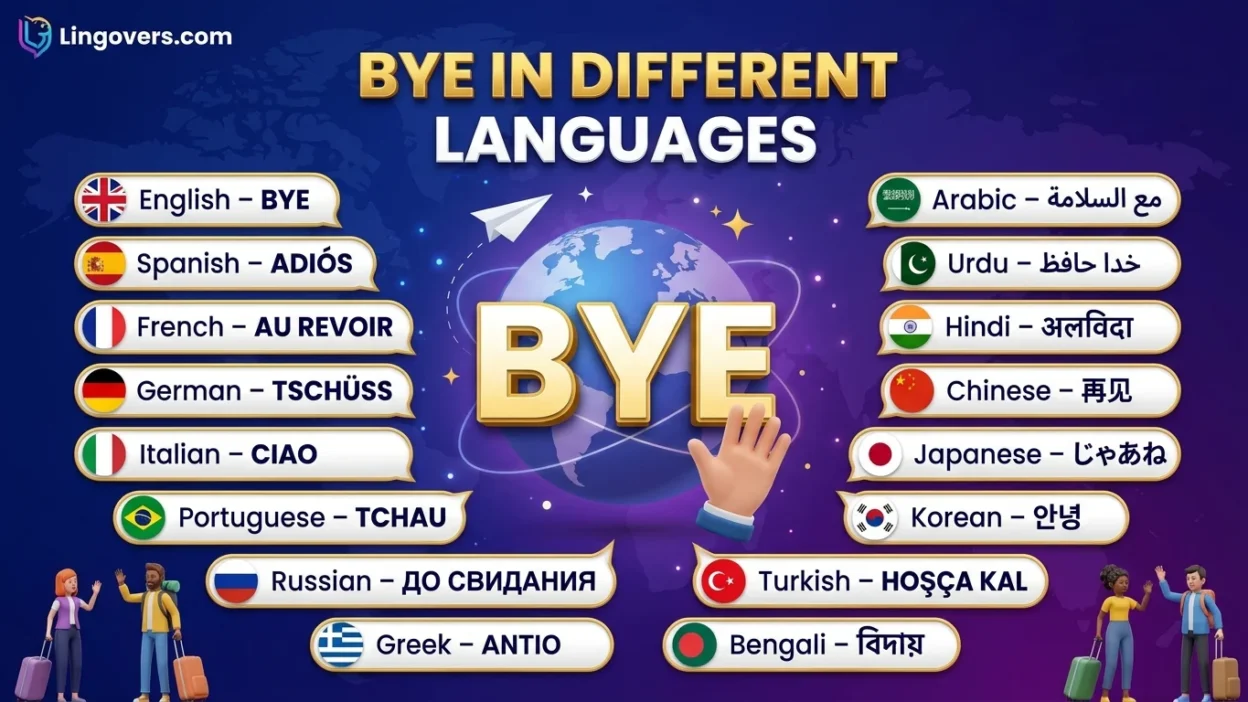
| Language | Native Phrase | Easy Pronunciation | Example Sentence | English Meaning |
| English | Bye | BAI | Bye, see you tomorrow! | Bye, see you tomorrow! |
| Spanish | Adiós | ah-dee-OHS | ¡Adiós, hasta mañana! | Goodbye, see you tomorrow! |
| French | Au revoir | oh ruh-VWAHR | Au revoir, à bientôt ! | Goodbye, see you soon! |
| German | Tschüss | CHOOSS | Tschüss, bis morgen! | Bye, see you tomorrow! |
| Italian | Arrivederci | ah-ree-veh-DEHR-chee | Arrivederci, a presto! | Goodbye, see you soon! |
| Portuguese | Tchau | CHOW | Tchau, até amanhã! | Bye, see you tomorrow! |
| Dutch | Doei | DOO-ee | Doei, tot morgen! | Bye, see you tomorrow! |
| Russian | До свидания | duh svee-DAH-nee-yah | До свидания, до завтра! | Goodbye, see you tomorrow! |
| Ukrainian | До побачення | doh poh-BAH-chehn-nyah | До побачення, до завтра! | Goodbye, see you tomorrow! |
| Polish | Do widzenia | doh vee-DZEH-nyah | Do widzenia, do jutra! | Goodbye, see you tomorrow! |
| Czech | Na shledanou | nah SKHLEH-dah-noh | Na shledanou, uvidíme se zítra! | Goodbye, see you tomorrow! |
| Slovak | Dovidenia | doh-VEE-deh-nyah | Dovidenia, do zajtra! | Goodbye, see you tomorrow! |
| Slovenian | Nasvidenje | nahs-vee-DEH-nyeh | Nasvidenje, se vidimo jutri! | Goodbye, see you tomorrow! |
| Croatian | Doviđenja | doh-vee-JEH-nyah | Doviđenja, vidimo se sutra! | Goodbye, see you tomorrow! |
| Serbian | Довиђења | doh-VEE-jeh-nyah | Довиђења, видимо се сутра! | Goodbye, see you tomorrow! |
| Bulgarian | Довиждане | doh-VEEZH-dah-neh | Довиждане, до утре! | Goodbye, see you tomorrow! |
| Macedonian | Довидување | doh-vee-DOO-vah-nyeh | Довидување, до утре! | Goodbye, see you tomorrow! |
| Greek | Αντίο | ah-DEE-oh | Αντίο, τα λέμε αύριο! | Goodbye, see you tomorrow! |
| Romanian | La revedere | lah reh-veh-DEH-reh | La revedere, pe mâine! | Goodbye, see you tomorrow! |
| Hungarian | Viszlát | VEES-laat | Viszlát, holnap találkozunk! | Goodbye, see you tomorrow! |
| Swedish | Hej då | HAY doh | Hej då, vi ses imorgon! | Bye, see you tomorrow! |
| Norwegian | Ha det | hah deh | Ha det, vi sees i morgen! | Bye, see you tomorrow! |
| Danish | Farvel | fah-VEHL | Farvel, vi ses i morgen! | Goodbye, see you tomorrow! |
| Finnish | Näkemiin | NA-keh-meen | Näkemiin, nähdään huomenna! | Goodbye, see you tomorrow! |
| Icelandic | Bless | BLESS | Bless, sjáumst á morgun! | Bye, see you tomorrow! |
| Irish | Slán | SLAWN | Slán, feicfidh mé thú amárach! | Bye, I’ll see you tomorrow! |
| Welsh | Hwyl fawr | HOO-il VOWR | Hwyl fawr, wela i chi yfory! | Goodbye, see you tomorrow! |
| Scottish Gaelic | Tìoraidh | CHEE-ree | Tìoraidh, chì mi a-màireach thu! | Bye, I’ll see you tomorrow! |
| Turkish | Hoşça kal | HOSH-cha kal | Hoşça kal, yarın görüşürüz! | Goodbye, see you tomorrow! |
| Arabic | مع السلامة | ma-as-sa-LAA-mah | مع السلامة، أراك غدًا! | Goodbye, see you tomorrow! |
| Hebrew | להתראות | leh-hit-rah-OHT | להתראות, נתראה מחר! | Goodbye, see you tomorrow! |
| Persian | خداحافظ | kho-daa-haa-FEZ | خداحافظ، فردا میبینمت! | Goodbye, I’ll see you tomorrow! |
| Urdu | خدا حافظ | KHU-daa HAA-fiz | خدا حافظ، کل ملتے ہیں! | Goodbye, see you tomorrow! |
| Hindi | अलविदा | ul-VI-daa | अलविदा, कल मिलते हैं! | Goodbye, see you tomorrow! |
| Bengali | বিদায় | bi-DAI | বিদায়, কাল দেখা হবে! | Goodbye, see you tomorrow! |
| Punjabi | ਅਲਵਿਦਾ | ul-VI-daa | ਅਲਵਿਦਾ, ਕੱਲ੍ਹ ਮਿਲਦੇ ਹਾਂ! | Goodbye, see you tomorrow! |
| Gujarati | આવજો | AA-voh-jo | આવજો, કાલે મળીશું! | Goodbye, see you tomorrow! |
| Marathi | पुन्हा भेटू | pun-HAA bheh-TOO | पुन्हा भेटू, उद्या भेटूया! | See you again, let’s meet tomorrow! |
| Nepali | बिदा | bi-DAA | बिदा, भोलि भेटौँला! | Goodbye, see you tomorrow! |
| Sinhala | ආයුබෝවන් | aa-yoo-BOH-wan | ආයුබෝවන්, හෙට හමුවෙමු! | Goodbye, see you tomorrow! |
| Tamil | போய் வருகிறேன் | POY va-ruh-GI-ren | போய் வருகிறேன், நாளை சந்திப்போம்! | Goodbye, see you tomorrow! |
| Telugu | వెళ్లొస్తాను | vel-loh-STAAN-oo | వెళ్లొస్తాను, రేపు కలుద్దాం! | Goodbye, see you tomorrow! |
| Kannada | ಹೋಗಿ ಬರುತ್ತೇನೆ | HOH-gee ba-RUT-tay-nay | ಹೋಗಿ ಬರುತ್ತೇನೆ, ನಾಳೆ ಸಿಗೋಣ! | Goodbye, see you tomorrow! |
| Malayalam | വിട | vi-DAH | വിട, നാളെ കാണാം! | Goodbye, see you tomorrow! |
| Chinese (Mandarin) | 再见 | dzai-JYEN | 再见,明天见! | Goodbye, see you tomorrow! |
| Japanese | じゃあね | JAA-neh | じゃあね、また明日! | Bye, see you tomorrow! |
| Korean | 안녕히 가세요 | an-NYONG-hee gah-SEH-yoh | 안녕히 가세요, 내일 봐요! | Goodbye, see you tomorrow! |
| Vietnamese | Tạm biệt | tahm BYEHT | Tạm biệt, hẹn gặp lại ngày mai! | Goodbye, see you tomorrow! |
| Thai | ลาก่อน | laa-GAWN | ลาก่อน แล้วพบกันพรุ่งนี้! | Goodbye, see you tomorrow! |
| Indonesian | Sampai jumpa | SAHM-pai JOOM-pah | Sampai jumpa besok! | See you tomorrow! |
| Malay | Selamat tinggal | suh-LAH-mat TING-gal | Selamat tinggal, jumpa lagi esok! | Goodbye, see you again tomorrow! |
| Filipino (Tagalog) | Paalam | pah-AH-lam | Paalam, magkita tayo bukas! | Goodbye, let’s meet tomorrow! |
| Burmese | သွားတော့မယ် | THWAH taw MEH | သွားတော့မယ်၊ မနက်ဖြန်တွေ့မယ်။ | I’m leaving now; see you tomorrow! |
| Khmer | លាហើយ | lee-HAEY | លាហើយ ជួបគ្នាថ្ងៃស្អែក! | Goodbye, see you tomorrow! |
| Lao | ລາກ່ອນ | laa-GAWN | ລາກ່ອນ, ພົບກັນມື້ອື່ນ! | Goodbye, see you tomorrow! |
| Mongolian | Баяртай | bah-YAR-tai | Баяртай, маргааш уулзъя! | Goodbye, see you tomorrow! |
| Kazakh | Сау болыңыз | sow boh-luh-NYIZ | Сау болыңыз, ертең кездесеміз! | Goodbye, see you tomorrow! |
| Uzbek | Xayr | KHAIR | Xayr, ertaga ko‘rishamiz! | Goodbye, see you tomorrow! |
| Azerbaijani | Sağ ol | SAH-ol | Sağ ol, sabah görüşərik! | Goodbye, see you tomorrow! |
| Armenian | Ցտեսություն | ts-teh-soo-TYOON | Ցտեսություն, վաղը կհանդիպենք։ | Goodbye, see you tomorrow! |
| Georgian | ნახვამდის | nahkh-VAM-dees | ნახვამდის, ხვალ შევხვდებით! | Goodbye, see you tomorrow! |
| Estonian | Head aega | HEH-ad AH-eh-gah | Head aega, näeme homme! | Goodbye, see you tomorrow! |
| Latvian | Uz redzēšanos | ooz REHD-zeh-shah-nohs | Uz redzēšanos, tiksimies rīt! | Goodbye, see you tomorrow! |
| Lithuanian | Viso gero | VEE-soh GEH-roh | Viso gero, susitiksime rytoj! | Goodbye, see you tomorrow! |
| Basque | Agur | ah-GOOR | Agur, bihar arte! | Goodbye, see you tomorrow! |
| Catalan | Adéu | ah-DEH-oo | Adéu, fins demà! | Goodbye, see you tomorrow! |
| Swahili | Kwaheri | kwah-HEH-ree | Kwaheri, tutaonana kesho! | Goodbye, see you tomorrow! |
| Afrikaans | Totsiens | TOT-seens | Totsiens, sien jou môre! | Goodbye, see you tomorrow! |
| Yoruba | Ó dàbọ̀ | oh dah-BAW | Ó dàbọ̀, a ó rí ara wa lọ́la! | Goodbye, we will see each other tomorrow! |
| Zulu | Hamba kahle | HAM-bah KAH-shleh | Hamba kahle, sizobonana kusasa! | Go well, see you tomorrow! |
Note: Some languages have different goodbye expressions depending on formality, the relationship between speakers, and whether the speaker or listener is leaving. The table includes commonly used expressions and natural variations.
How to Say Bye in Different Languages Casually
Not every goodbye needs to sound formal. When speaking with friends, family members, or people you know well, casual expressions are often more natural.
Here are some popular informal ways to say bye:
| Language | Casual Goodbye | Pronunciation |
| English | See ya! | SEE-yuh |
| Spanish | Chao | CHOW |
| French | Salut | sah-LOO |
| German | Tschüss | CHOOSS |
| Italian | Ciao | CHOW |
| Portuguese | Tchau | CHOW |
| Dutch | Doei | DOO-ee |
| Japanese | じゃあね | JAA-neh |
| Korean | 안녕 | an-NYONG |
| Mandarin | 拜拜 | BAI-bai |
These expressions are particularly useful in friendly conversations, text messages, and informal situations.
Formal and Informal Ways to Say Goodbye
Different situations require different goodbye expressions. Some languages have separate phrases for formal and informal communication.
Formal goodbyes are suitable for professional conversations, unfamiliar people, business meetings, and respectful interactions.
Informal goodbyes are generally used with friends, relatives, classmates, and people you know well.
For example:
- French: Au revoir is a standard goodbye, while Salut is casual.
- Spanish: Adiós is a common goodbye, while Chao is informal.
- Italian: Arrivederci is more formal, while Ciao is casual.
- Japanese: さようなら (Sayōnara) is a more formal or final-sounding farewell, while じゃあね (Jaa ne) is casual.
- German: Auf Wiedersehen is formal, while Tschüss is informal.
Understanding these differences helps you choose the right expression for each conversation.
Different Ways to Say Bye Around the World
People use different expressions depending on their culture, language, and social situation.
Here are five common types of goodbye expressions:
1. Friendly Goodbyes
Friendly goodbyes are used when leaving friends or family members. Examples include Ciao in Italian, Chao in Spanish, and Tschüss in German.
2. Formal Goodbyes
Formal expressions show respect and politeness. Examples include Au revoir in French, Do widzenia in Polish, and До свидания in Russian.
3. Goodbye Until Next Time
Some expressions suggest that you expect to meet the person again. Examples include Hasta luego in Spanish, À bientôt in French, and Sampai jumpa in Indonesian.
4. Goodbye in Text Messages
Short expressions are especially popular in digital conversations. People commonly use Bye, Cya, Tchau, and 拜拜 when messaging friends.
5. Goodbye Before Travelling
When someone is going on a journey, goodbye expressions can communicate warmth and good wishes. Phrases such as Bon voyage in French and Safe travels in English are useful examples.
Why Is Learning Goodbye in Different Languages Important?
Learning how to say goodbye in other languages is useful for several reasons.
- Better communication: You can end conversations politely with people from different backgrounds.
- Travel confidence: Knowing common farewell expressions makes travelling easier.
- Cultural awareness: You can understand how different cultures express politeness and respect.
- Language development: Goodbye expressions help expand your everyday vocabulary.
- Stronger connections: Using someone’s native language can make conversations feel more personal and welcoming.
Conclusion
Saying bye is a small but meaningful part of everyday communication. Although the expression changes from one language to another, its purpose remains the same: ending a conversation politely and warmly.
From Adiós in Spanish and Au revoir in French to Khuda Hafiz in Urdu and Sayonara in Japanese, these goodbye translations introduce you to different languages and cultures around the world.
Learning these expressions can improve your vocabulary, make travelling easier, and help you connect with people from different backgrounds.
FAQs
1. How do you say bye in 10 different languages?
Here are 10 popular translations of bye:
- Spanish: Adiós
- French: Au revoir
- German: Tschüss
- Italian: Ciao
- Portuguese: Tchau
- Japanese: Sayōnara
- Arabic: Ma’a as-salama
- Hindi: Alvida
- Urdu: Khuda Hafiz
- Chinese: Zàijiàn
2. What is the most common way to say goodbye in different languages?
Some widely recognised goodbye expressions include Adiós in Spanish, Au revoir in French, Tschüss in German, Ciao in Italian, and Sayōnara in Japanese. Their everyday usage varies depending on the country and situation.
3. How do you say bye in Japanese?
Bye in Japanese can be expressed as じゃあね (Jaa ne) in casual conversations. Another expression is さようなら (Sayōnara), which can sound more formal or suggest a longer farewell.
4. What is the difference between bye and goodbye?
Both words are used when ending a conversation. Goodbye is generally more complete and can sound slightly more formal, while bye is shorter and commonly used in everyday conversations with friends, family, and colleagues.
5. How do you say bye politely in another language?
You can use expressions such as Au revoir in French, Adiós in Spanish, Arrivederci in Italian, Do widzenia in Polish, and Khuda Hafiz in Urdu. Choosing a polite expression depends on the language and the relationship between speakers.