The word “apple” is one of the most familiar food words in the world. Apples are enjoyed in many countries and appear in everyday conversations, recipes, school lessons, markets, and cultural traditions. Learning apple in different languages is a simple and useful way to expand your vocabulary. Whether you are studying a new language, traveling internationally, writing multilingual content, or simply curious about languages, knowing how different cultures say “apple” can be surprisingly interesting.
In this guide, you will discover apple in different languages in all languages, including the native word, easy English pronunciation, a short real-life example, and its English meaning.
How to Say Apple in Different Languages
The translation of “apple” varies widely across language families. Some words may sound familiar because languages share historical roots, while others are completely different.
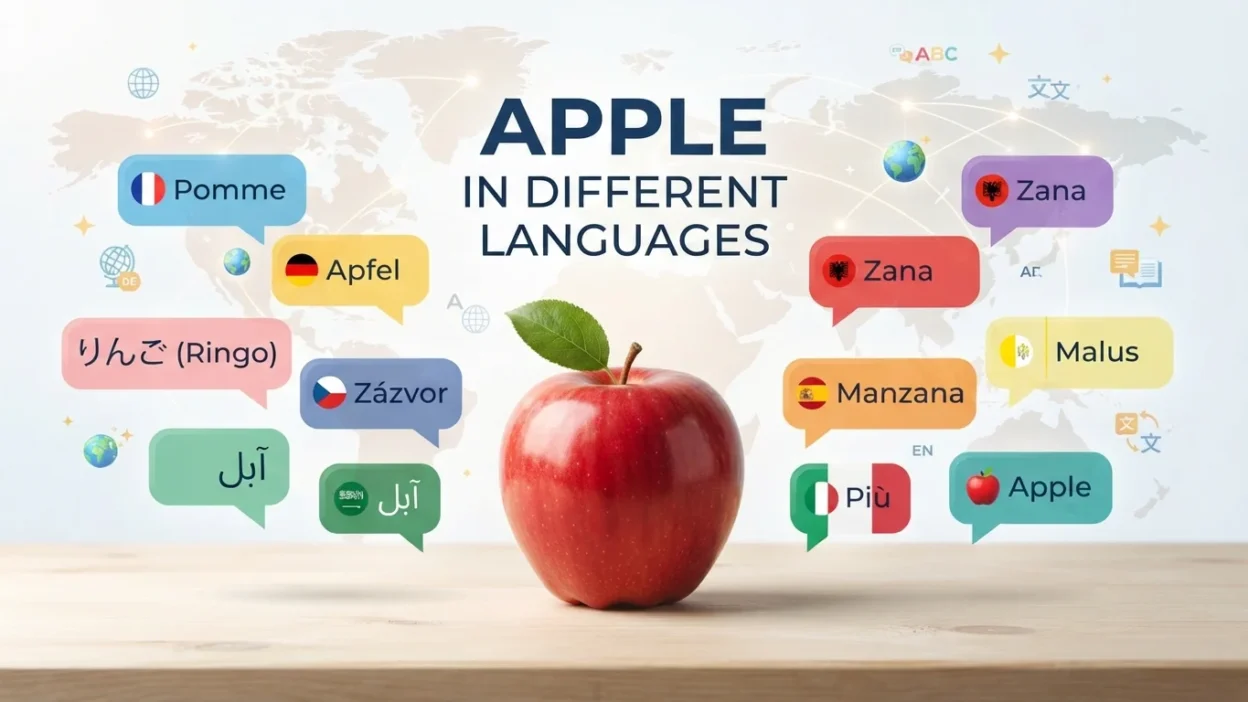
For example, Spanish uses manzana, French uses pomme, German uses Apfel, Italian uses mela, and Japanese uses りんご (ringo).
Apple in Different Languages Around the World
| Language | Native Phrase | Easy English Pronunciation | Example Sentence | English Meaning |
| English | Apple | Ap-uhl | I ate an apple. | I ate an apple. |
| Spanish | Manzana | Man-sa-na | Comí una manzana. | I ate an apple. |
| French | Pomme | Pom | J’ai mangé une pomme. | I ate an apple. |
| German | Apfel | Ap-fel | Ich habe einen Apfel gegessen. | I ate an apple. |
| Italian | Mela | Meh-la | Ho mangiato una mela. | I ate an apple. |
| Portuguese | Maçã | Ma-san | Eu comi uma maçã. | I ate an apple. |
| Dutch | Appel | Ap-uhl | Ik heb een appel gegeten. | I ate an apple. |
| Russian | Яблоко | Ya-bla-ka | Я съел яблоко. | I ate an apple. |
| Ukrainian | Яблуко | Ya-bloo-ko | Я з’їв яблуко. | I ate an apple. |
| Polish | Jabłko | Yap-ko | Zjadłem jabłko. | I ate an apple. |
| Czech | Jablko | Ya-blko | Snědl jsem jablko. | I ate an apple. |
| Slovak | Jablko | Ya-blko | Zjedol som jablko. | I ate an apple. |
| Hungarian | Alma | Ahl-ma | Megettem egy almát. | I ate an apple. |
| Romanian | Măr | Mur | Am mâncat un măr. | I ate an apple. |
| Bulgarian | Ябълка | Ya-bul-ka | Изядох една ябълка. | I ate an apple. |
| Serbian | Јабука | Ya-boo-ka | Појео сам јабуку. | I ate an apple. |
| Croatian | Jabuka | Ya-boo-ka | Pojeo sam jabuku. | I ate an apple. |
| Bosnian | Jabuka | Ya-boo-ka | Pojeo sam jabuku. | I ate an apple. |
| Slovenian | Jabolko | Ya-bol-ko | Pojedel sem jabolko. | I ate an apple. |
| Albanian | Mollë | Mol-uh | Hëngra një mollë. | I ate an apple. |
| Greek | Μήλο | Mee-lo | Έφαγα ένα μήλο. | I ate an apple. |
| Turkish | Elma | El-ma | Bir elma yedim. | I ate an apple. |
| Arabic | تفاحة | Tuffa-ha | أكلت تفاحة. | I ate an apple. |
| Hebrew | תפוח | Ta-poo-akh | אכלתי תפוח. | I ate an apple. |
| Persian | سیب | Seeb | من یک سیب خوردم. | I ate an apple. |
| Urdu | سیب | Seb | میں نے ایک سیب کھایا۔ | I ate an apple. |
| Hindi | सेब | Seb | मैंने एक सेब खाया। | I ate an apple. |
| Punjabi | ਸੇਬ | Seb | ਮੈਂ ਇੱਕ ਸੇਬ ਖਾਧਾ। | I ate an apple. |
| Bengali | আপেল | A-pel | আমি একটি আপেল খেয়েছি। | I ate an apple. |
| Gujarati | સફરજન | Sa-far-jan | મેં એક સફરજન ખાધું. | I ate an apple. |
| Marathi | सफरचंद | Sa-far-chand | मी एक सफरचंद खाल्ले. | I ate an apple. |
| Tamil | ஆப்பிள் | Aa-pil | நான் ஒரு ஆப்பிள் சாப்பிட்டேன். | I ate an apple. |
| Telugu | ఆపిల్ | Aa-pil | నేను ఒక ఆపిల్ తిన్నాను. | I ate an apple. |
| Kannada | ಸೇಬು | Say-boo | ನಾನು ಒಂದು ಸೇಬು ತಿಂದೆ. | I ate an apple. |
| Malayalam | ആപ്പിൾ | Aa-pil | ഞാൻ ഒരു ആപ്പിൾ കഴിച്ചു. | I ate an apple. |
| Sinhala | ඇපල් | A-pel | මම ඇපල් ගෙඩියක් කෑවා. | I ate an apple. |
| Nepali | स्याउ | Syaa-u | मैले एउटा स्याउ खाएँ। | I ate an apple. |
| Chinese (Mandarin) | 苹果 | Ping-gwoh | 我吃了一个苹果。 | I ate an apple. |
| Cantonese | 蘋果 | Ping-gwo | 我食咗一個蘋果。 | I ate an apple. |
| Japanese | りんご | Rin-go | りんごを食べました。 | I ate an apple. |
| Korean | 사과 | Sa-gwa | 사과를 먹었어요. | I ate an apple. |
| Vietnamese | Quả táo | Gwah tao | Tôi đã ăn một quả táo. | I ate an apple. |
| Thai | แอปเปิล | Aep-pern | ฉันกินแอปเปิลหนึ่งลูก | I ate an apple. |
| Indonesian | Apel | A-pel | Saya makan sebuah apel. | I ate an apple. |
| Malay | Epal | Eh-pal | Saya makan sebiji epal. | I ate an apple. |
| Filipino | Mansanas | Man-sa-nas | Kumain ako ng mansanas. | I ate an apple. |
| Burmese | ပန်းသီး | Pan-thee | ပန်းသီးတစ်လုံး စားခဲ့တယ်။ | I ate an apple. |
| Khmer | ផ្លែប៉ោម | Phlay pa-om | ខ្ញុំបានញ៉ាំផ្លែប៉ោមមួយ។ | I ate an apple. |
| Lao | ໝາກໂປມ | Maak pom | ຂ້ອຍກິນໝາກໂປມໜຶ່ງໜ່ວຍ. | I ate an apple. |
| Mongolian | Алим | A-lim | Би алим идсэн. | I ate an apple. |
| Kazakh | Алма | Al-ma | Мен алма жедім. | I ate an apple. |
| Uzbek | Olma | Ol-ma | Men olma yedim. | I ate an apple. |
| Azerbaijani | Alma | Al-ma | Mən alma yedim. | I ate an apple. |
| Georgian | ვაშლი | Vash-lee | მე ვაშლი შევჭამე. | I ate an apple. |
| Armenian | Խնձոր | Khun-dzor | Ես խնձոր կերա։ | I ate an apple. |
| Swahili | Tufaha | Too-fa-ha | Nilikula tufaha. | I ate an apple. |
| Zulu | I-apula | Ee-ah-poo-la | Ngidle i-apula. | I ate an apple. |
| Xhosa | I-apile | Ee-ah-pee-leh | Nditye i-apile. | I ate an apple. |
| Afrikaans | Appel | Ap-uhl | Ek het ‘n appel geëet. | I ate an apple. |
| Yoruba | Àpùlù | Ah-poo-loo | Mo jẹ àpùlù kan. | I ate an apple. |
| Igbo | Apụl | Ah-pool | Eri m otu apụl. | I ate an apple. |
| Hausa | Tuffa | Toof-fa | Na ci tuffa. | I ate an apple. |
| Amharic | አፕል | Ap-pel | አንድ አፕል በላሁ። | I ate an apple. |
| Somali | Tufaax | Too-faakh | Waxaan cunay tufaax. | I ate an apple. |
| Finnish | Omena | Oh-meh-na | Söin omenan. | I ate an apple. |
| Swedish | Äpple | Ep-leh | Jag åt ett äpple. | I ate an apple. |
| Norwegian | Eple | Ep-leh | Jeg spiste et eple. | I ate an apple. |
| Danish | Æble | Eh-bleh | Jeg spiste et æble. | I ate an apple. |
| Icelandic | Epli | Ep-lee | Ég borðaði epli. | I ate an apple. |
| Estonian | Õun | Uh-oon | Ma sõin õuna. | I ate an apple. |
| Latvian | Ābols | Aa-bols | Es apēdu ābolu. | I ate an apple. |
| Lithuanian | Obuolys | Oh-boo-oh-lis | Aš suvalgiau obuolį. | I ate an apple. |
| Irish | Úll | Ool | D’ith mé úll. | I ate an apple. |
| Welsh | Afal | A-val | Bwytais i afal. | I ate an apple. |
Why Learn Apple in Different Languages?
Learning the word apple in different languages is useful because food vocabulary is part of everyday communication. You may encounter the word while shopping, ordering food, reading recipes, studying, or talking about healthy eating.
Food words are also excellent vocabulary for beginners because they are easy to connect with real objects and daily experiences.
Useful Reasons to Learn the Word
- Improve basic vocabulary.
- Practice pronunciation.
- Communicate while traveling.
- Understand foreign-language menus.
- Learn food-related expressions.
- Compare different languages.
- Build confidence in everyday conversations.
Apple in Different Languages and Food Vocabulary
Once you know how to say apple, you can learn other fruit names as well. Useful related vocabulary includes:
- Banana
- Orange
- Mango
- Grape
- Peach
- Pear
- Strawberry
- Watermelon
- Pineapple
- Cherry
Learning fruit vocabulary together makes it easier to remember individual words and build complete sentences.
How to Say Apple in Different Languages Naturally
A direct translation is useful, but using the word in context is even better. For example, you can practice phrases such as:
- I want an apple.
- I ate an apple.
- This apple is sweet.
- I bought some apples.
- The apple is red.
- Do you like apples?
- I eat an apple every morning.
These sentences help you understand how the word fits into everyday communication.
Apple in Different Languages Around the World
The word apple is found in everyday conversations across many cultures. Although the fruit itself is familiar worldwide, each language has developed its own word for it.
Some translations are surprisingly similar. For example, apple in English, appel in Dutch and Afrikaans, and Apfel in German share related linguistic origins. Other languages use completely different words, such as manzana in Spanish, pomme in French, and ringo in Japanese.
This makes apple in different languages around the world an interesting topic for anyone learning vocabulary or exploring connections between languages.
Apple Vocabulary for Travelers
Knowing how to say apple in different languages can be useful when shopping at local markets, ordering food, reading menus, or talking about fruits while traveling.
For example, a traveler may want to ask:
- Do you have apples?
- How much does an apple cost?
- Is this apple fresh?
- I would like one apple.
- These apples are sweet.
Learning a few food-related words can make everyday communication easier, especially when visiting places where you do not speak the local language fluently.
Apple in Different Languages and Cultural Connections
Apples have an important place in many cultures and traditions. They are associated with food, agriculture, education, health, stories, and seasonal celebrations.
Because apples are grown in many parts of the world, the word appears frequently in local markets, recipes, children’s books, school lessons, and conversations about healthy eating.
Learning apple in different languages translations therefore gives you more than a simple vocabulary list. It also provides an easy introduction to food-related language and cultural differences.
How to Remember Apple Translations
If you want to memorize the translations, avoid trying to learn them all at once. Instead, group them into smaller sets.
Practice Similar Words
Words such as apple, appel, Apfel, and eple have similarities that can make them easier to remember.
Use Visual Associations
Imagine a red apple whenever you practice a new translation. Connecting a word with an image can make vocabulary easier to recall.
Create Short Sentences
Instead of memorizing only the word, practice sentences such as:
“I ate an apple.”
Then learn how that complete sentence works in your target language.
Practice Pronunciation
Say each translation aloud several times. This helps you become familiar with sounds that may not exist in English.
Review Regularly
A few minutes of practice every day can be more effective than studying a large vocabulary list only once.
Apple and Related Fruit Words
After learning apple in different languages, you can expand your vocabulary by learning other common fruits.
Useful fruit vocabulary includes:
- Banana
- Orange
- Mango
- Pear
- Peach
- Cherry
- Grape
- Strawberry
- Watermelon
- Pineapple
Learning these words together creates a useful foundation for conversations about food, shopping, recipes, and healthy eating.
Common Questions About Apples in Other Languages
The word apple is often used in simple beginner sentences. Some common questions include:
How do you say apple in Spanish?
You say manzana.
How do you say apple in French?
You say pomme.
How do you say apple in German?
You say Apfel.
How do you say apple in Japanese?
You say りんご (ringo).
How do you say apple in Korean?
You say 사과 (sagwa).
These examples show why learning food vocabulary can be a useful starting point for language learners.
Why Food Words Are Easy to Learn
Food vocabulary is often easier to remember because it connects directly to familiar objects and experiences.
When you learn a word such as apple, you can immediately connect it with:
- Its appearance
- Its taste
- Its smell
- Eating it
- Buying it
- Cooking with it
- Seeing it in a market
This practical connection can make apple in different languages easier to memorize than abstract vocabulary.
Apple in Different Languages for Students
Students can use this vocabulary for language assignments, classroom activities, pronunciation practice, and multilingual projects.
Teachers and learners can also compare words across language families to identify similarities and differences.
For example, several European languages have words that share noticeable similarities, while languages from Asia, Africa, and the Middle East often use very different forms.
Comparing these words can make vocabulary study more engaging and memorable.
Conclusion
Learning apple in different languages is a simple way to build useful food vocabulary while discovering how languages differ around the world. From manzana in Spanish and pomme in French to Apfel in German, ringo in Japanese, and sagwa in Korean, the same familiar fruit has many different names.
The language table provides native words, easy pronunciations, real-life examples, and English meanings, making it useful for students, travelers, writers, and language enthusiasts.
Whether you are learning a new language or simply exploring apple in different languages around the world, these translations give you an easy and practical starting point.
FAQs
1. How do you say apple in different languages?
The word varies by language. For example, it is manzana in Spanish, pomme in French, Apfel in German, mela in Italian, りんご (ringo) in Japanese, and 사과 (sagwa) in Korean.
2. What is apple in Spanish?
Apple is manzana in Spanish. It is pronounced approximately man-sa-na.
3. What is apple in French?
Apple is pomme in French. It is pronounced approximately pom.
4. What is apple in Japanese?
Apple is りんご (ringo) in Japanese. It is pronounced approximately rin-go.
5. Why should I learn apple in different languages?
Learning the word “apple” in multiple languages can improve basic vocabulary, help with travel and food-related conversations, and make it easier to understand how different languages describe familiar everyday objects.