Food is one of the easiest ways to connect with different cultures, and learning food vocabulary can make travel and communication much easier. If you are searching for appetizer in different languages, this guide gives you translations from around the world.
An appetizer is a small dish or serving usually eaten before the main course. Depending on the culture, the closest word may mean starter, hors d’oeuvre, or a small dish served at the beginning of a meal.
Below, you will find appetizer in all languages with the native phrase, an easy English pronunciation, a short real-life example, and the English meaning of that example.
Appetizer in Different Languages
| Language | Correct Native Phrase | Easy English Pronunciation | Example Sentence | English Meaning |
| Afrikaans | voorgereg | FOOR-khuh-rekh | Ons bestel ‘n voorgereg. | We are ordering an appetizer. |
| Albanian | meze | MEH-zeh | Porositëm një meze. | We ordered an appetizer. |
| Arabic | مقبلات | muqabbilāt | طلبنا مقبلات. | We ordered appetizers. |
| Armenian | նախուտեստ | na-khoo-TEST | Մենք նախուտեստ պատվիրեցինք։ | We ordered an appetizer. |
| Azerbaijani | qəlyanaltı | gah-lyan-al-TUH | Qəlyanaltı sifariş etdik. | We ordered an appetizer. |
| Basque | sarrera | sah-RREH-rah | Sarrera bat eskatu dugu. | We ordered an appetizer. |
| Belarusian | закуска | zah-KOOS-kah | Мы замовілі закуску. | We ordered an appetizer. |
| Bengali | মুখরোচক খাবার | mookh-ro-CHOK kha-bar | আমরা একটি মুখরোচক খাবার অর্ডার করলাম। | We ordered an appetizer. |
| Bosnian | predjelo | PREHD-yeh-loh | Naručili smo predjelo. | We ordered an appetizer. |
| Bulgarian | предястие | preh-DYAS-tee-eh | Поръчахме предястие. | We ordered an appetizer. |
| Catalan | aperitiu | ah-peh-ree-TEE-oo | Hem demanat un aperitiu. | We ordered an appetizer. |
| Chinese (Mandarin) | 开胃菜 | kāiwèicài | 我们点了开胃菜。 | We ordered appetizers. |
| Croatian | predjelo | PREHD-yeh-loh | Naručili smo predjelo. | We ordered an appetizer. |
| Czech | předkrm | PREZH-krm | Objednali jsme předkrm. | We ordered an appetizer. |
| Danish | forret | FOH-ret | Vi bestiller en forret. | We are ordering an appetizer. |
| Dutch | voorgerecht | VOOR-kheh-rekht | We bestellen een voorgerecht. | We are ordering an appetizer. |
| Estonian | eelroog | AY-loh-rohk | Me tellisime eelroa. | We ordered an appetizer. |
| Finnish | alkuruoka | AL-koo-roo-oh-kah | Tilasimme alkuruoan. | We ordered an appetizer. |
| French | entrée | ahn-TRAY | Nous commandons une entrée. | We are ordering an appetizer. |
| Georgian | აპეტაიზერი | ah-peh-TIE-zeh-ree | ჩვენ აპეტაიზერი შევუკვეთეთ. | We ordered an appetizer. |
| German | Vorspeise | FOR-shpy-zeh | Wir bestellen eine Vorspeise. | We are ordering an appetizer. |
| Greek | ορεκτικό | oh-rek-tee-KOH | Παραγγείλαμε ένα ορεκτικό. | We ordered an appetizer. |
| Gujarati | ભૂખ વધારનાર નાસ્તો | bhookh vadhar-nar nas-to | અમે નાસ્તો મંગાવ્યો. | We ordered an appetizer. |
| Haitian Creole | aperitif | ah-peh-ree-TEEF | Nou kòmande yon aperitif. | We ordered an appetizer. |
| Hebrew | מתאבן | meh-ta-AH-ven | הזמנו מתאבן. | We ordered an appetizer. |
| Hindi | क्षुधावर्धक | kshoo-dha-VAR-dhak | हमने क्षुधावर्धक मंगाया। | We ordered an appetizer. |
| Hungarian | előétel | EH-loh-ay-tel | Előételt rendeltünk. | We ordered an appetizer. |
| Icelandic | forréttur | FOR-ret-tur | Við pöntuðum forrétt. | We ordered an appetizer. |
| Indonesian | hidangan pembuka | hee-DAH-ngan pem-BOO-kah | Kami memesan hidangan pembuka. | We ordered an appetizer. |
| Irish | réamhbhia | RAYV-ee-ah | D’ordaíomar réamhbhia. | We ordered an appetizer. |
| Italian | antipasto | an-tee-PAH-stoh | Abbiamo ordinato un antipasto. | We ordered an appetizer. |
| Japanese | 前菜 | zensai | 前菜を注文しました。 | We ordered an appetizer. |
| Kannada | ಉಪಾಹಾರ | oo-paa-HAAR-ah | ನಾವು ಉಪಾಹಾರವನ್ನು ಆರ್ಡರ್ ಮಾಡಿದೆವು. | We ordered an appetizer. |
| Kazakh | тіскебасар | tees-keh-bah-SAR | Біз тіскебасарға тапсырыс бердік. | We ordered an appetizer. |
| Khmer | ម្ហូបក្លែម | mhoo-op klaem | យើងបានកម្មង់ម្ហូបក្លែម។ | We ordered an appetizer. |
| Korean | 전채 | jeon-chae | 우리는 전채를 주문했어요. | We ordered an appetizer. |
| Lao | ອາຫານວ່າງ | aa-hahn wahng | ພວກເຮົາສັ່ງອາຫານວ່າງ. | We ordered an appetizer. |
| Latvian | uzkoda | OOS-koh-dah | Mēs pasūtījām uzkodu. | We ordered an appetizer. |
| Lithuanian | užkandis | ooz-KAN-dis | Mes užsisakėme užkandį. | We ordered an appetizer. |
| Macedonian | предјадење | prehd-YAH-deh-nyeh | Нарачавме предјадење. | We ordered an appetizer. |
| Malay | pembuka selera | pem-BOO-kah seh-LEH-rah | Kami memesan pembuka selera. | We ordered an appetizer. |
| Malayalam | വിശപ്പകറ്റുന്ന വിഭവം | vi-shap-pa-ka-tun-na vi-BHA-vam | ഞങ്ങൾ ഒരു വിഭവം ഓർഡർ ചെയ്തു. | We ordered an appetizer. |
| Maltese | appetizer | ap-uh-TIE-zur | Ordna appetizer. | Order an appetizer. |
| Marathi | क्षुधावर्धक पदार्थ | kshoo-dha-VAR-dhak pa-dar-tha | आम्ही क्षुधावर्धक पदार्थ मागवला. | We ordered an appetizer. |
| Mongolian | зууш | zoosh | Бид зууш захиалсан. | We ordered an appetizer. |
| Nepali | खाजा | kha-ja | हामीले खाजा मगायौं। | We ordered an appetizer. |
| Norwegian | forrett | FOH-ret | Vi bestiller en forrett. | We are ordering an appetizer. |
| Pashto | اشتها ورکوونکی خواړه | ishtaha war-koon-kay khwa-rah | موږ اشتها ورکوونکی خواړه وغوښتل. | We ordered an appetizer. |
| Persian | پیشغذا | pish-GHAH | ما پیشغذا سفارش دادیم. | We ordered an appetizer. |
| Polish | przystawka | pshi-STAF-kah | Zamówiliśmy przystawkę. | We ordered an appetizer. |
| Portuguese | aperitivo | ah-peh-ree-TEE-voh | Pedimos um aperitivo. | We ordered an appetizer. |
| Punjabi | ਭੁੱਖ ਵਧਾਉਣ ਵਾਲਾ ਨਾਸ਼ਤਾ | bhukh vadhaun wala nashta | ਅਸੀਂ ਨਾਸ਼ਤਾ ਮੰਗਵਾਇਆ। | We ordered an appetizer. |
| Romanian | aperitiv | ah-peh-ree-TEEV | Am comandat un aperitiv. | We ordered an appetizer. |
| Russian | закуска | zah-KOOS-kah | Мы заказали закуску. | We ordered an appetizer. |
| Serbian | предјело | PREHD-yeh-loh | Naručili smo predjelo. | We ordered an appetizer. |
| Slovak | predjedlo | PREHD-yehd-loh | Objednali sme predjedlo. | We ordered an appetizer. |
| Slovenian | predjed | PREHD-yed | Naročili smo predjed. | We ordered an appetizer. |
| Spanish | aperitivo | ah-peh-ree-TEE-voh | Pedimos un aperitivo. | We ordered an appetizer. |
| Swahili | kitafunwa | kee-ta-FOON-wah | Tuliagiza kitafunwa. | We ordered an appetizer. |
| Swedish | förrätt | FUR-ret | Vi beställer en förrätt. | We are ordering an appetizer. |
| Tamil | முன்பரிமாறும் உணவு | mun-pa-ri-MAA-rum oo-na-voo | நாங்கள் முன்பரிமாறும் உணவை ஆர்டர் செய்தோம். | We ordered an appetizer. |
| Telugu | ఆకలి పుట్టించే వంటకం | aa-ka-lee put-TIN-cheh van-ta-kam | మేము ఆకలి పుట్టించే వంటకం ఆర్డర్ చేశాము. | We ordered an appetizer. |
| Thai | อาหารเรียกน้ำย่อย | aa-hǎan rîak náam yɔ̂i | เราสั่งอาหารเรียกน้ำย่อย | We ordered an appetizer. |
| Turkish | meze | MEH-zeh | Bir meze sipariş ettik. | We ordered an appetizer. |
| Ukrainian | закуска | zah-KOOS-kah | Ми замовили закуску. | We ordered an appetizer. |
| Urdu | اشتہاء انگیز غذا | isht-i-haa an-geiz ghiza | ہم نے اشتہاء انگیز غذا منگوائی۔ | We ordered an appetizer. |
| Uzbek | ishtaha ochuvchi taom | ish-ta-ha och-OO-chee ta-OM | Biz ishtaha ochuvchi taom buyurtma qildik. | We ordered an appetizer. |
| Vietnamese | món khai vị | mon khai vee | Chúng tôi gọi món khai vị. | We ordered an appetizer. |
| Welsh | blasyn | BLAS-in | Fe wnaethon ni archebu blasyn. | We ordered an appetizer. |
| Yiddish | פֿאָרגעריכט | FOR-geh-rikht | מיר האָבן אַ פֿאָרגעריכט באַשטעלט. | We ordered an appetizer. |
| Zulu | isiqalisi | ee-see-ka-LEE-see | Sa-oda isiqalisi. | We ordered an appetizer. |
What Does “Appetizer” Mean?
An appetizer is a small portion of food served before the main course. It is usually intended to stimulate the appetite and introduce the flavours of a meal.
Common examples include:
- Spring rolls
- Bruschetta
- Soup
- Salads
- Stuffed mushrooms
- Small sandwiches
- Dips with bread
- Fried appetisers
- Cheese plates
The exact concept differs between cuisines. Some cultures traditionally serve several small dishes, while others use one starter before the main meal.
How to Say “Appetizer” in Different Languages
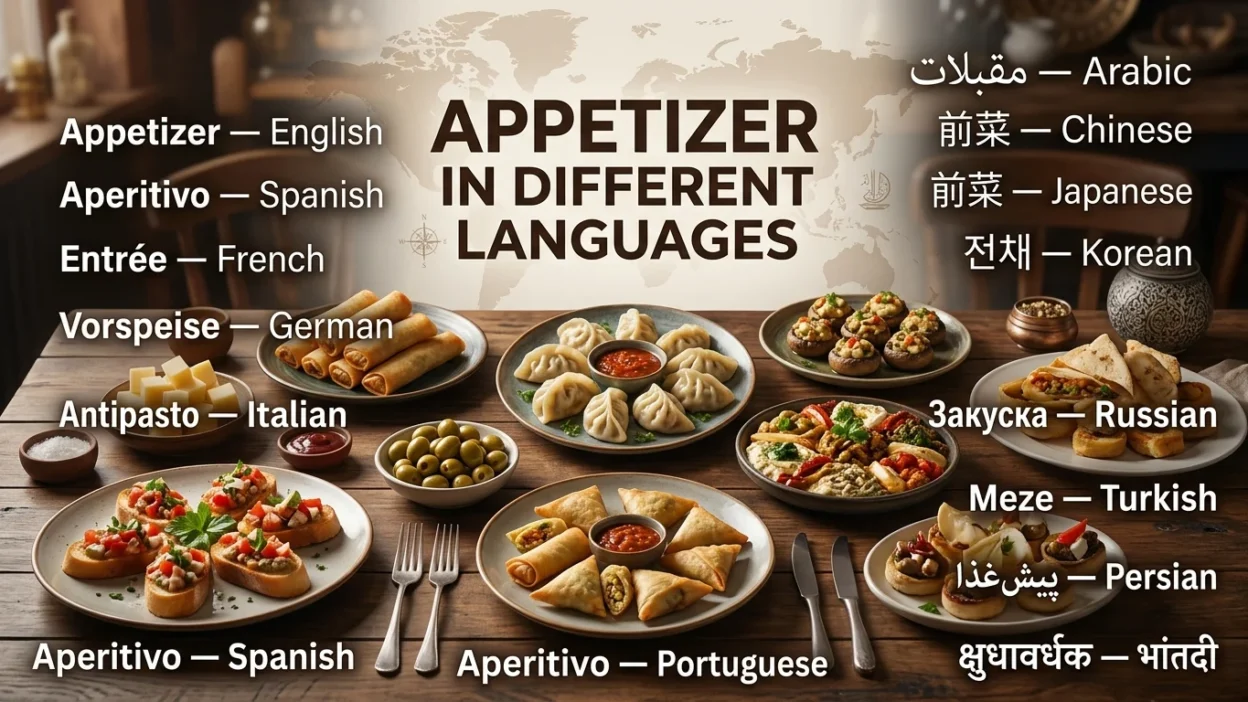
If you want to know how to say appetizer in different languages, the translation often depends on the country’s food culture.
For example:
- Spanish: aperitivo
- French: entrée
- German: Vorspeise
- Italian: antipasto
- Portuguese: aperitivo
- Chinese: 开胃菜
- Japanese: 前菜
- Korean: 전채
- Turkish: meze
- Persian: پیشغذا
- Russian: закуска
Some of these words have broader meanings than the English word “appetizer.” For example, antipasto traditionally refers to food served before an Italian meal, while meze refers to a selection of small dishes common in several cuisines.
Appetizer in Different Languages Around the World
The word appetizer in different languages around the world reflects the diversity of dining traditions.
In many European languages, the concept is closely connected with the idea of a first course. German uses Vorspeise, literally referring to a dish served before the main food. French uses entrée, while Italian uses antipasto.
In other regions, the closest term may describe a snack or small dish rather than a formal first course.
This is why direct translations can vary depending on the culinary context.
Appetizer vs Starter
The words appetizer and starter are often used for the same type of dish.
In American English, appetizer is very common. In British English, starter is often preferred.
For example:
American English:
“We ordered an appetizer before dinner.”
British English:
“We ordered a starter before dinner.”
Both refer to food served before the main course.
Appetizer vs Hors d’Oeuvre
An appetizer and an hors d’oeuvre can be similar, but they are not always identical.
An appetizer is generally part of a meal and comes before the main course. Hors d’oeuvres are often small individual bites that may be served at parties, receptions, or before a meal.
Examples of hors d’oeuvres include small canapés, stuffed vegetables, cheese bites, and other finger foods.
Popular Appetizers Around the World
Different cultures have their own popular foods that may be served as appetizers or starters.
Italian cuisine is known for antipasti, while Mediterranean and Middle Eastern cuisines feature mezze. Japanese meals may begin with small seasonal dishes, and many South Asian meals include snacks or small savoury foods before or alongside the main dishes.
This variety makes appetizer vocabulary particularly interesting for language learners and food lovers.
Why Learn Appetizer in Different Languages?
Learning food vocabulary is useful when travelling, ordering at restaurants, studying another language, or discussing international cuisine.
Knowing how to recognise the local word for appetizer can make menus easier to understand.
It can also help you discover how different cultures organise meals and describe food.
Appetizer Translations: Quick Reference
Here are some of the most useful translations to remember:
- English: appetizer
- French: entrée
- Spanish: aperitivo
- Italian: antipasto
- German: Vorspeise
- Dutch: voorgerecht
- Portuguese: aperitivo
- Chinese: 开胃菜
- Japanese: 前菜
- Korean: 전채
- Arabic: مقبلات
- Hindi: क्षुधावर्धक
- Turkish: meze
- Persian: پیشغذا
- Russian: закуска
These words can help you recognise appetizer-related vocabulary when reading international menus.
Conclusion
The word appetizer has many different translations around the world, and the closest term can depend on local cuisine and dining traditions. From antipasto in Italian to Vorspeise in German and 前菜 in Japanese, each language offers its own way to describe food served before the main course.
This guide provides exactly 70 appetizer in different languages translations, making it a useful reference for travellers, food lovers, language learners, and anyone interested in international cuisine.
FAQs
1. How do you say “appetizer” in different languages?
“Appetizer” has different translations depending on the language. Some common examples are aperitivo in Spanish and Portuguese, antipasto in Italian, Vorspeise in German, entrée in French, and 前菜 in Japanese.
2. What is “appetizer” in languages?
There are many words for appetizer because different cultures use different terms for small dishes served before a main course. This article provides exactly translations with pronunciations and example sentences.
3. What is the difference between an appetizer and a starter?
They generally refer to the same part of a meal. Appetizer is especially common in American English, while starter is more common in British English.
4. How do you say “appetizer” in Spanish, French, and Italian?
In Spanish, a common term is aperitivo. In French, entrée is commonly used for a first course. In Italian, antipasto refers to food traditionally served before the main course.
5. What are appetizers called in different cultures?
Different cultures use different terms and food traditions. Italian cuisine uses antipasti, Turkish and neighbouring cuisines commonly use meze, Japanese cuisine uses terms such as 前菜, and German uses Vorspeise for a first course.