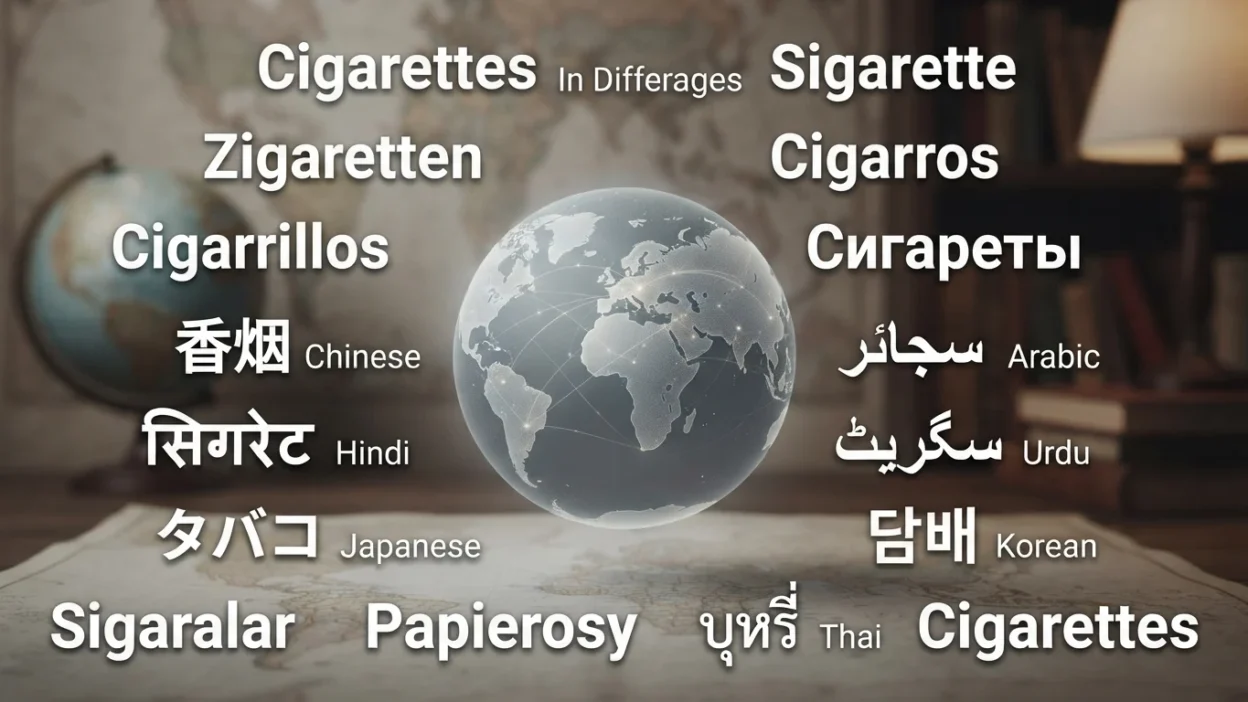
Have you ever wondered how to say cigarettes in different languages? The word may look and sound completely different depending on the language and writing system.
Learning this vocabulary can be useful for language students, travelers, translators, writers, and anyone interested in how everyday words change across cultures. In this guide, you’ll find cigarettes in different languages translations, including the native phrase, an easy English pronunciation, a short example sentence, and its English meaning.
Whether you are searching for how to say cigarettes in different languages, comparing cigarettes translations, or exploring how the word is expressed around the world, this multilingual list provides a convenient reference.
Cigarettes in Different Languages
| Language | Native Phrase | Easy English Pronunciation | Example Sentence | English Meaning |
| Afrikaans | sigarette | see-gah-RET-uh | Hy koop nie sigarette nie. | He does not buy cigarettes. |
| Albanian | cigare | tsee-GAH-reh | Ai nuk pi cigare. | He does not smoke cigarettes. |
| Arabic | سجائر | sa-GHA-ir | لا أدخن السجائر. | I do not smoke cigarettes. |
| Armenian | ծխախոտ | tsuh-kha-KHOT | Ես ծխախոտ չեմ ծխում։ | I do not smoke cigarettes. |
| Azerbaijani | siqaretlər | see-gah-RET-ler | Mən siqaret çəkmirəm. | I do not smoke cigarettes. |
| Basque | zigarroak | see-GAR-ro-ak | Ez ditut zigarroak erretzen. | I do not smoke cigarettes. |
| Belarusian | цыгарэты | tsy-ga-REH-ty | Я не куру цыгарэты. | I do not smoke cigarettes. |
| Bengali | সিগারেট | see-ga-RET | আমি সিগারেট খাই না। | I do not smoke cigarettes. |
| Bosnian | cigarete | tsee-gah-REH-teh | Ne pušim cigarete. | I do not smoke cigarettes. |
| Bulgarian | цигари | tsee-GAH-ree | Не пуша цигари. | I do not smoke cigarettes. |
| Catalan | cigarrets | see-gah-RETS | No fumo cigarrets. | I do not smoke cigarettes. |
| Chinese (Mandarin) | 香烟 | shyahng-yen | 我不抽香烟。 | I do not smoke cigarettes. |
| Croatian | cigarete | tsee-gah-REH-teh | Ne pušim cigarete. | I do not smoke cigarettes. |
| Czech | cigarety | TSEE-gah-reh-ty | Nekouřím cigarety. | I do not smoke cigarettes. |
| Danish | cigaretter | see-gah-RET-er | Jeg ryger ikke cigaretter. | I do not smoke cigarettes. |
| Dutch | sigaretten | see-gah-RET-ten | Ik rook geen sigaretten. | I do not smoke cigarettes. |
| Estonian | sigaretid | see-gah-REH-tid | Ma ei suitseta sigarette. | I do not smoke cigarettes. |
| Finnish | savukkeet | SAH-voo-ket | En polta savukkeita. | I do not smoke cigarettes. |
| French | cigarettes | see-gah-RET | Je ne fume pas de cigarettes. | I do not smoke cigarettes. |
| Galician | cigarros | see-GAR-ros | Non fumo cigarros. | I do not smoke cigarettes. |
| Georgian | სიგარეტები | see-gah-REH-teh-bee | სიგარეტს არ ვეწევი. | I do not smoke cigarettes. |
| German | Zigaretten | tsee-gah-RET-ten | Ich rauche keine Zigaretten. | I do not smoke cigarettes. |
| Greek | τσιγάρα | tsee-GHA-ra | Δεν καπνίζω τσιγάρα. | I do not smoke cigarettes. |
| Gujarati | સિગારેટ | see-ga-RET | હું સિગારેટ પીતો નથી. | I do not smoke cigarettes. |
| Haitian Creole | sigarèt | see-gah-RET | Mwen pa fimen sigarèt. | I do not smoke cigarettes. |
| Hebrew | סיגריות | see-gah-ree-YOT | אני לא מעשן סיגריות. | I do not smoke cigarettes. |
| Hindi | सिगरेट | sig-RET | मैं सिगरेट नहीं पीता हूँ। | I do not smoke cigarettes. |
| Hungarian | cigaretták | TSIH-gah-ret-tak | Nem dohányzom cigarettát. | I do not smoke cigarettes. |
| Icelandic | sígarettur | SEE-gah-ret-tur | Ég reyki ekki sígarettur. | I do not smoke cigarettes. |
| Indonesian | rokok | ROH-kok | Saya tidak merokok. | I do not smoke cigarettes. |
| Irish | toitíní | tih-CHEE-nee | Ní chaithim toitíní. | I do not smoke cigarettes. |
| Italian | sigarette | see-gah-RET-teh | Non fumo sigarette. | I do not smoke cigarettes. |
| Japanese | タバコ | tah-bah-koh | 私はタバコを吸いません。 | I do not smoke cigarettes. |
| Kannada | ಸಿಗರೇಟುಗಳು | see-gah-ray-too-ga-loo | ನಾನು ಸಿಗರೇಟು ಸೇದುವುದಿಲ್ಲ. | I do not smoke cigarettes. |
| Kazakh | темекі | teh-meh-KEE | Мен темекі шекпеймін. | I do not smoke cigarettes. |
| Korean | 담배 | tam-bae | 저는 담배를 피우지 않아요. | I do not smoke cigarettes. |
| Latin | sigarellae | see-gah-REL-lie | Sigarellas non fumo. | I do not smoke cigarettes. |
| Latvian | cigaretes | tsee-gah-REH-tes | Es nesmēķēju cigaretes. | I do not smoke cigarettes. |
| Lithuanian | cigaretės | tsee-gah-REH-tes | Aš nerūkau cigarečių. | I do not smoke cigarettes. |
| Macedonian | цигари | tsee-GAH-ree | Не пушам цигари. | I do not smoke cigarettes. |
| Malay | rokok | ROH-kok | Saya tidak merokok. | I do not smoke cigarettes. |
| Maltese | sigaretti | see-gah-RET-tee | Ma npejjipx sigaretti. | I do not smoke cigarettes. |
| Marathi | सिगारेट | see-gah-RET | मी सिगारेट ओढत नाही. | I do not smoke cigarettes. |
| Mongolian | тамхи | TAM-khee | Би тамхи татдаггүй. | I do not smoke cigarettes. |
| Nepali | चुरोट | choo-ROT | म चुरोट पिउँदिनँ। | I do not smoke cigarettes. |
| Norwegian | sigaretter | see-gah-RET-ter | Jeg røyker ikke sigaretter. | I do not smoke cigarettes. |
| Persian | سیگار | see-GAAR | من سیگار نمیکشم. | I do not smoke cigarettes. |
| Polish | papierosy | pah-pyeh-ROH-sih | Nie palę papierosów. | I do not smoke cigarettes. |
| Portuguese | cigarros | see-GAHR-roos | Eu não fumo cigarros. | I do not smoke cigarettes. |
| Punjabi | ਸਿਗਰਟਾਂ | sig-RAH-tan | ਮੈਂ ਸਿਗਰਟਾਂ ਨਹੀਂ ਪੀਂਦਾ। | I do not smoke cigarettes. |
| Romanian | țigări | tsee-GAR | Nu fumez țigări. | I do not smoke cigarettes. |
| Russian | сигареты | see-gah-REH-ty | Я не курю сигареты. | I do not smoke cigarettes. |
| Serbian | цигарете | tsee-gah-REH-teh | Не пушим цигарете. | I do not smoke cigarettes. |
| Slovak | cigarety | TSEE-gah-reh-ty | Nefajčím cigarety. | I do not smoke cigarettes. |
| Slovenian | cigarete | tsee-gah-REH-teh | Ne kadim cigaret. | I do not smoke cigarettes. |
| Spanish | cigarrillos | see-gah-REE-yos | No fumo cigarrillos. | I do not smoke cigarettes. |
| Swahili | sigara | see-GAH-rah | Sivuti sigara. | I do not smoke cigarettes. |
| Swedish | cigaretter | see-gah-RET-ter | Jag röker inte cigaretter. | I do not smoke cigarettes. |
| Tamil | சிகரெட்டுகள் | see-gah-RET-too-gal | நான் சிகரெட் புகைப்பதில்லை. | I do not smoke cigarettes. |
| Telugu | సిగరెట్లు | see-gah-RET-loo | నేను సిగరెట్లు కాల్చను. | I do not smoke cigarettes. |
| Thai | บุหรี่ | boo-REE | ฉันไม่สูบบุหรี่ | I do not smoke cigarettes. |
| Turkish | sigaralar | see-gah-rah-LAR | Sigara içmiyorum. | I do not smoke cigarettes. |
| Ukrainian | сигарети | see-gah-REH-ty | Я не курю сигарети. | I do not smoke cigarettes. |
| Urdu | سگریٹ | sig-RET | میں سگریٹ نہیں پیتا۔ | I do not smoke cigarettes. |
| Uzbek | sigaretalar | see-gah-reh-TAH-lar | Men sigaret chekmayman. | I do not smoke cigarettes. |
| Vietnamese | thuốc lá | took lah | Tôi không hút thuốc lá. | I do not smoke cigarettes. |
| Welsh | sigaréts | see-gah-RETS | Nid wyf yn ysmygu sigaréts. | I do not smoke cigarettes. |
| Yiddish | סיגאַרעטן | see-gah-RET-en | איך רויך נישט סיגאַרעטן. | I do not smoke cigarettes. |
| Zulu | osikilidi | oh-see-kee-LEE-dee | Angibhemi osikilidi. | I do not smoke cigarettes. |
How to Say Cigarettes in Different Languages
If you are searching for how to say cigarettes in different languages, you will notice that many languages use words derived from similar European roots, while others have completely different native terms.
For example, Spanish commonly uses cigarrillos, French uses cigarettes, German uses Zigaretten, Polish uses papierosy, and Chinese uses 香烟. Japanese commonly uses タバコ, while Korean uses 담배.
The exact word can also vary depending on whether a language commonly uses a singular form, plural form, or a broader word for tobacco products.
Cigarettes in Different Languages Around the World
The vocabulary for cigarettes reflects the history of language, trade, and cultural exchange. Many European languages have words that resemble one another, while languages in Asia and other regions may use completely different terms.
For example, cigarettes in different languages around the world include cigarrillos in Spanish, sigarette in Italian, Zigaretten in German, papierosy in Polish, sigaralar in Turkish, タバコ in Japanese, and 담배 in Korean.
These differences make everyday vocabulary an interesting way to explore how languages develop.
Cigarettes Translations in European Languages
European languages contain many related forms of the word.
French uses cigarettes, Italian uses sigarette, German uses Zigaretten, Dutch uses sigaretten, Danish uses cigaretter, and Swedish uses cigaretter.
Some languages use notably different vocabulary. Polish uses papierosy, while Portuguese uses cigarros and Spanish uses cigarrillos.
Cigarettes in Different Asian Languages
Asian languages offer a wide range of vocabulary for cigarettes and tobacco products.
Mandarin Chinese uses 香烟, Japanese commonly uses タバコ, and Korean uses 담배. Hindi uses सिगरेट, Urdu uses سگریٹ, and Punjabi uses ਸਿਗਰਟਾਂ.
Thai uses บุหรี่, Vietnamese uses thuốc lá, and Persian uses سیگار.
Cigarette vs. Cigarettes: Understanding the Difference
In English, cigarette is singular and cigarettes is plural. Other languages handle number differently.
For example:
- English: cigarette / cigarettes
- Spanish: cigarrillo / cigarrillos
- French: cigarette / cigarettes
- Italian: sigaretta / sigarette
- German: Zigarette / Zigaretten
- Portuguese: cigarro / cigarros
- Russian: сигарета / сигареты
In some languages, the most common everyday term may function differently from the direct English singular or plural equivalent.
Common Phrases Related to Cigarettes
When learning vocabulary, it can be useful to understand common sentence patterns rather than memorizing one word alone.
Examples in English include:
- Cigarettes are harmful to health.
- He does not smoke cigarettes.
- She quit smoking cigarettes.
- The cigarettes are in the drawer.
- Smoking is prohibited here.
- He threw away the cigarettes.
- They were talking about smoking.
- The sign says no smoking.
These examples help learners understand how the vocabulary works naturally in context.
Why Learn Cigarettes in Different Languages?
Learning vocabulary from everyday subjects can help language learners recognize words in conversations, books, films, menus, signs, and other real-world situations.
The term can also be relevant when reading public-health information or understanding smoking-related warnings while traveling internationally.
It is important to remember that cigarette smoking carries serious health risks, including increased risks of cancer, cardiovascular disease, and respiratory illness.
Quick Cigarettes Translations in Popular Languages
Here is a quick reference for some commonly searched cigarettes in different languages translations:
- English: cigarettes
- Spanish: cigarrillos
- French: cigarettes
- Italian: sigarette
- German: Zigaretten
- Portuguese: cigarros
- Polish: papierosy
- Russian: сигареты
- Arabic: سجائر
- Hindi: सिगरेट
- Urdu: سگریٹ
- Chinese: 香烟
- Japanese: タバコ
- Korean: 담배
- Turkish: sigaralar
- Thai: บุหรี่
Conclusion
The word cigarettes has many different forms around the world. Some languages use words that closely resemble English, while others have completely different terms.
From cigarrillos in Spanish and sigarette in Italian to сигареты in Russian, 香烟 in Chinese, タバコ in Japanese, and 담배 in Korean, these translations show the diversity of everyday vocabulary.
Whether you are studying languages, translating text, or exploring cigarettes in different languages in all languages, this list provides a useful multilingual reference.
FAQs
What is cigarettes in different languages?
“Cigarettes” has different translations across languages. Common examples include cigarrillos in Spanish, cigarettes in French, sigarette in Italian, Zigaretten in German, сигареты in Russian, and 香烟 in Chinese.
How do you say cigarettes in Spanish?
In Spanish, cigarettes can be translated as cigarrillos, pronounced approximately see-gah-REE-yos.
What is cigarettes in Hindi and Urdu?
In Hindi, cigarettes are commonly called सिगरेट (sigaret). In Urdu, the word is سگریٹ (sigret).
How do you say cigarettes in different languages?
Some translations are cigarettes in French, sigarette in Italian, Zigaretten in German, cigarrillos in Spanish, papierosy in Polish, 香烟 in Chinese, and 담배 in Korean.
Is cigarette the same word in every language?
No. Some languages have words that resemble “cigarette,” while others use completely different vocabulary. The form may also change depending on whether the word is singular or plural.