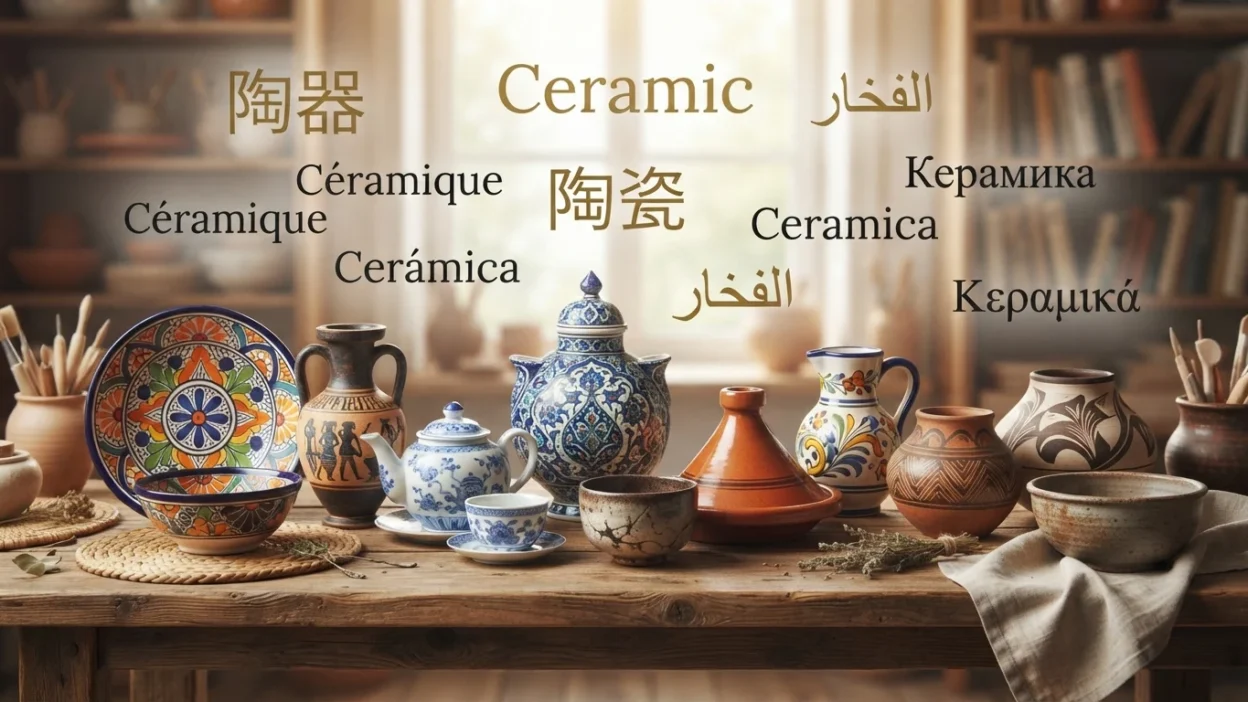
Ceramic is an important material used in homes, art, construction, pottery, tableware, tiles, and decoration. Whether you are traveling, learning a new language, studying art, or shopping for ceramic products, knowing how to say ceramic in different languages can be surprisingly useful.
This guide explores ceramic in different languages in all languages, covering] widely spoken languages from around the world. You will find the native translation, an easy English pronunciation, and a practical example sentence for each language.
If you have ever wondered how to say ceramic in different languages, this complete collection of ceramic translations will help you communicate more confidently. From Europe and Asia to Africa and the Middle East, discover how people refer to ceramic materials around the world.
Ceramic in Different Languages
| Language | Translation | Easy Pronunciation | Example Sentence | English Meaning |
| Afrikaans | keramiek | keh-rah-MEEK | Hierdie vaas is van keramiek gemaak. | This vase is made of ceramic. |
| Albanian | qeramikë | cheh-rah-MEE-kuh | Kjo vazo është prej qeramike. | This vase is made of ceramic. |
| Arabic | سيراميك | see-rah-MEEK | هذا الطبق مصنوع من السيراميك. | This plate is made of ceramic. |
| Armenian | կերամիկա | keh-rah-mee-KAH | Այս ամանը կերամիկայից է։ | This bowl is made of ceramic. |
| Azerbaijani | keramika | keh-rah-MEE-kah | Bu vaza keramikadan hazırlanıb. | This vase is made of ceramic. |
| Basque | zeramika | zeh-rah-MEE-kah | Loreontzi hau zeramikaz egina dago. | This flowerpot is made of ceramic. |
| Belarusian | кераміка | keh-rah-MEE-kah | Гэтая ваза зроблена з керамікі. | This vase is made of ceramic. |
| Bengali | সিরামিক | see-rah-MIK | এই কাপটি সিরামিকের তৈরি। | This cup is made of ceramic. |
| Bosnian | keramika | keh-rah-MEE-kah | Ova vaza je napravljena od keramike. | This vase is made of ceramic. |
| Bulgarian | керамика | keh-reh-MEE-kah | Тази чаша е направена от керамика. | This cup is made of ceramic. |
| Catalan | ceràmica | seh-RAH-mee-kah | Aquesta tassa és de ceràmica. | This cup is made of ceramic. |
| Cebuano | seramika | seh-rah-MEE-kah | Ang plorera hinimo sa seramika. | The vase is made of ceramic. |
| Chinese (Simplified) | 陶瓷 | tao-ts | 这个杯子是陶瓷做的。 | This cup is made of ceramic. |
| Croatian | keramika | keh-rah-MEE-kah | Ova šalica je izrađena od keramike. | This cup is made of ceramic. |
| Czech | keramika | KEH-rah-mee-kah | Tento hrnek je vyroben z keramiky. | This mug is made of ceramic. |
| Danish | keramik | keh-RAH-mik | Denne vase er lavet af keramik. | This vase is made of ceramic. |
| Dutch | keramiek | keh-rah-MEEK | Deze vaas is gemaakt van keramiek. | This vase is made of ceramic. |
| English | ceramic | suh-RAM-ik | This bowl is made of ceramic. | This bowl is made of ceramic. |
| Esperanto | ceramiko | tseh-rah-MEE-koh | Ĉi tiu taso estas farita el ceramiko. | This cup is made of ceramic. |
| Estonian | keraamika | keh-RAA-mee-kah | See vaas on valmistatud keraamikast. | This vase is made of ceramic. |
| Filipino | seramika | seh-rah-MEE-kah | Ang mangkok na ito ay gawa sa seramika. | This bowl is made of ceramic. |
| Finnish | keramiikka | KEH-rah-MEEK-kah | Tämä maljakko on tehty keramiikasta. | This vase is made of ceramic. |
| French | céramique | seh-rah-MEEK | Cette tasse est en céramique. | This cup is made of ceramic. |
| Galician | cerámica | seh-RAH-mee-kah | Esta cunca é de cerámica. | This cup is made of ceramic. |
| Georgian | კერამიკა | keh-rah-MEE-kah | ეს ვაზა კერამიკისგან არის დამზადებული. | This vase is made of ceramic. |
| German | Keramik | keh-rah-MEEK | Diese Vase ist aus Keramik. | This vase is made of ceramic. |
| Greek | κεραμικό | keh-rah-mee-KO | Αυτό το μπολ είναι από κεραμικό. | This bowl is made of ceramic. |
| Gujarati | સિરામિક | see-RAH-mik | આ કપ સિરામિકનો બનેલો છે. | This cup is made of ceramic. |
| Haitian Creole | seramik | seh-rah-MEEK | Vaz sa a fèt ak seramik. | This vase is made of ceramic. |
| Hausa | yumbu | YOOM-boo | An yi wannan kwano da yumbu. | This bowl is made of ceramic. |
| Hebrew | קרמיקה | keh-rah-MEE-kah | האגרטל הזה עשוי מקרמיקה. | This vase is made of ceramic. |
| Hindi | सिरेमिक | si-REH-mik | यह कप सिरेमिक का बना है। | This cup is made of ceramic. |
| Hungarian | kerámia | keh-RAA-mee-ah | Ez a váza kerámiából készült. | This vase is made of ceramic. |
| Icelandic | keramik | KEH-rah-mik | Þessi vasi er úr keramiki. | This vase is made of ceramic. |
| Igbo | seramik | seh-rah-MEEK | E ji seramik mee ite a. | This pot is made of ceramic. |
| Indonesian | keramik | keh-RAH-mik | Vas ini terbuat dari keramik. | This vase is made of ceramic. |
| Irish | ceirmeach | KYER-myakh | Tá an vása seo déanta as ceirmeach. | This vase is made of ceramic. |
| Italian | ceramica | cheh-RAH-mee-kah | Questa tazza è di ceramica. | This cup is made of ceramic. |
| Japanese | セラミック | seh-rah-MIK-ku | このカップはセラミック製です。 | This cup is made of ceramic. |
| Javanese | keramik | keh-RAH-mik | Vas iki digawe saka keramik. | This vase is made of ceramic. |
| Kannada | ಸೆರಾಮಿಕ್ | seh-RAH-mik | ಈ ಕಪ್ ಸೆರಾಮಿಕ್ನಿಂದ ಮಾಡಲಾಗಿದೆ. | This cup is made of ceramic. |
| Kazakh | керамика | keh-rah-MEE-kah | Бұл ваза керамикадан жасалған. | This vase is made of ceramic. |
| Khmer | សេរ៉ាមិច | seh-rah-MICH | ចាននេះធ្វើពីសេរ៉ាមិច។ | This bowl is made of ceramic. |
| Korean | 세라믹 | seh-rah-MIK | 이 컵은 세라믹으로 만들어졌습니다. | This cup is made of ceramic. |
| Kurdish | seramîk | seh-rah-MEEK | Ev vazo ji seramîkê hat çêkirin. | This vase is made of ceramic. |
| Lao | ເຊລາມິກ | seh-lah-MIK | ຈອກນີ້ເຮັດຈາກເຊລາມິກ. | This cup is made of ceramic. |
| Latvian | keramika | keh-RAH-mee-kah | Šī vāze ir izgatavota no keramikas. | This vase is made of ceramic. |
| Lithuanian | keramika | keh-RAH-mee-kah | Ši vaza pagaminta iš keramikos. | This vase is made of ceramic. |
| Macedonian | керамика | keh-rah-MEE-kah | Оваа чаша е направена од керамика. | This cup is made of ceramic. |
| Malay | seramik | seh-rah-MEEK | Pasu ini diperbuat daripada seramik. | This vase is made of ceramic. |
| Malayalam | സെറാമിക് | seh-RAH-mik | ഈ കപ്പ് സെറാമിക്കിൽ നിർമ്മിച്ചതാണ്. | This cup is made of ceramic. |
| Maltese | ċeramika | cheh-RAH-mee-kah | Din il-vażun huwa magħmul miċ-ċeramika. | This vase is made of ceramic. |
| Marathi | सिरेमिक | si-REH-mik | हा कप सिरेमिकचा बनलेला आहे. | This cup is made of ceramic. |
| Mongolian | керамик | keh-rah-MEEK | Энэ аяга керамикаар хийгдсэн. | This cup is made of ceramic. |
| Nepali | सिरामिक | si-RAH-mik | यो कप सिरामिकबाट बनेको छ। | This cup is made of ceramic. |
| Norwegian | keramikk | keh-RAH-mik | Denne vasen er laget av keramikk. | This vase is made of ceramic. |
| Persian | سرامیک | seh-rah-MEEK | این فنجان از سرامیک ساخته شده است. | This cup is made of ceramic. |
| Polish | ceramika | tseh-RAH-mee-kah | Ten kubek jest wykonany z ceramiki. | This mug is made of ceramic. |
| Portuguese | cerâmica | seh-RAH-mee-kah | Esta tigela é feita de cerâmica. | This bowl is made of ceramic. |
| Punjabi | ਸਿਰਾਮਿਕ | si-RAH-mik | ਇਹ ਕੱਪ ਸਿਰਾਮਿਕ ਦਾ ਬਣਿਆ ਹੈ। | This cup is made of ceramic. |
| Romanian | ceramică | cheh-RAH-mee-kuh | Această vază este din ceramică. | This vase is made of ceramic. |
| Russian | керамика | keh-RAH-mee-kah | Эта ваза сделана из керамики. | This vase is made of ceramic. |
| Serbian | керамика | keh-RAH-mee-kah | Ова шоља је направљена од керамике. | This cup is made of ceramic. |
| Slovak | keramika | KEH-rah-mee-kah | Táto váza je vyrobená z keramiky. | This vase is made of ceramic. |
| Slovenian | keramika | keh-RAH-mee-kah | Ta skodelica je izdelana iz keramike. | This cup is made of ceramic. |
| Somali | dhoobo | DHOH-boh | Weelkan waxaa laga sameeyay dhoobo. | This container is made of ceramic. |
| Spanish | cerámica | seh-RAH-mee-kah | Esta taza está hecha de cerámica. | This cup is made of ceramic. |
| Swahili | kauri | KOW-ree | Chombo hiki kimetengenezwa kwa kauri. | This container is made of ceramic. |
| Swedish | keramik | sheh-RAH-mik | Den här vasen är gjord av keramik. | This vase is made of ceramic. |
| Tamil | செராமிக் | seh-RAH-mik | இந்தக் கப் செராமிக்கால் செய்யப்பட்டது. | This cup is made of ceramic. |
| Telugu | సిరామిక్ | si-RAH-mik | ఈ కప్పు సిరామిక్తో తయారు చేయబడింది. | This cup is made of ceramic. |
| Thai | เซรามิก | seh-rah-MIK | ถ้วยนี้ทำจากเซรามิก | This cup is made of ceramic. |
| Turkish | seramik | seh-rah-MIK | Bu vazo seramikten yapılmıştır. | This vase is made of ceramic. |
| Ukrainian | кераміка | keh-rah-MEE-kah | Ця ваза зроблена з кераміки. | This vase is made of ceramic. |
| Urdu | سیرامک | see-RAH-mik | یہ کپ سیرامک کا بنا ہوا ہے۔ | This cup is made of ceramic. |
| Uzbek | keramika | keh-rah-MEE-kah | Bu vaza keramikadan yasalgan. | This vase is made of ceramic. |
| Vietnamese | gốm sứ | gom-suh | Chiếc cốc này được làm bằng gốm sứ. | This cup is made of ceramic. |
| Welsh | cerameg | keh-RAH-meg | Mae’r fâs hwn wedi’i wneud o serameg. | This vase is made of ceramic. |
| Yoruba | seramiki | seh-rah-MEE-kee | A fi seramiki ṣe ikoko yii. | This pot is made of ceramic. |
| Zulu | iseramikhi | ee-seh-rah-MEE-khee | Le ngosi yenziwe ngeseramikhi. | This container is made of ceramic. |
How to Say Ceramic in Different Languages
The word ceramic is widely recognized across many languages because it is connected to international art, manufacturing, architecture, and design. In many European languages, the translation comes from a similar linguistic root, resulting in words such as cerámica, ceramica, céramique, and Keramik.
However, some languages use words connected more closely with pottery, clay, earthenware, or traditional materials. This is why ceramic in different languages translations may vary depending on cultural and practical usage.
If you want to know how to say ceramic in different languages, it is also useful to understand the context. The word may refer to:
- Ceramic tiles
- Ceramic bowls and cups
- Ceramic art
- Ceramic pottery
- Ceramic materials
- Decorative ceramics
- Technical ceramics
Ceramic in All Languages and Cultural Context
Learning ceramic in different languages in all languages is useful because ceramics have played an important role in human culture for thousands of years.
Different regions developed unique ceramic traditions based on available clay, local techniques, and artistic styles. Today, ceramic products remain important in architecture, interior design, kitchens, bathrooms, art studios, and manufacturing.
When discussing ceramic in different languages around the world, you may notice that some translations refer specifically to ceramic materials, while others can also describe pottery or objects made from fired clay.
Why Learn Ceramic Translations?
Knowing the translation of ceramic can be useful in many real-life situations.
Travel and Shopping
When visiting another country, you may want to buy ceramic souvenirs, pottery, dishes, or decorative items. Knowing the local word can make communication easier.
Art and Pottery
Artists and pottery enthusiasts often encounter ceramic terminology in international workshops, museums, and exhibitions.
Construction and Interior Design
Ceramic tiles, sanitary products, and decorative surfaces are widely used in construction. Understanding the correct translation can help when discussing materials internationally.
Language Learning
Learning practical vocabulary makes a new language more useful. Words connected to everyday objects and materials are especially valuable for building vocabulary.
Common Uses of Ceramic
Ceramic is a versatile material with many practical and decorative uses. Some common examples include:
- Floor and wall tiles
- Cups and plates
- Bowls and cookware
- Vases and decorative objects
- Pottery and sculptures
- Bathroom fixtures
- Dental materials
- Electronic components
- Heat-resistant materials
Because ceramic is used in so many industries, learning its translation can be useful for students, travelers, artists, designers, and professionals.
Ceramic Around the World
Ceramic traditions exist in almost every part of the world. Different cultures have developed their own methods of shaping, glazing, decorating, and firing ceramic objects.
In some countries, ceramic art is closely connected with traditional pottery. In others, the word is more commonly associated with modern tiles, industrial materials, or decorative home products.
This global connection makes learning ceramic in different languages around the world an interesting way to explore both language and culture.
Tips for Pronouncing Ceramic in Other Languages
Pronunciation can vary significantly between languages, even when the written words look similar.
Here are a few simple tips:
- Listen carefully to native pronunciation when possible.
- Focus on syllables rather than reading every letter using English rules.
- Remember that similar-looking words may sound different.
- Practice the word inside a complete sentence.
- Learn the translation together with a practical example.
Using a complete sentence is often easier than memorizing an isolated word because it helps you understand the natural context.
Conclusion
Learning ceramic in different languages is useful for travelers, language learners, artists, designers, and anyone interested in pottery or materials. This guide provides 70 translations to help you understand how the word is used across different cultures and regions.
Whether you are discussing pottery, tiles, decorative objects, or ceramic materials, knowing these translations can make international communication easier. Keep practicing the words with the example sentences to improve both vocabulary and pronunciation.
FAQs
What is ceramic in different languages?
Ceramic has different translations depending on the language. Common examples include cerámica in Spanish, céramique in French, Keramik in German, ceramica in Italian, and seramik in Turkish.
How do you say ceramic in Spanish?
Ceramic in Spanish is cerámica. For example, “Esta taza está hecha de cerámica” means “This cup is made of ceramic.”
How do you say ceramic in French?
Ceramic in French is céramique. It is commonly used when referring to ceramic materials, objects, pottery, and decorative products.
Is ceramic the same word in every language?
No. While many languages use similar versions of the word because of shared linguistic roots, other languages use completely different words connected to clay, pottery, or earthenware.
Why are ceramic translations useful?
Ceramic translations are useful for travel, shopping, art, pottery, construction, interior design, education, and language learning. Knowing the correct word helps you communicate more clearly in international situations.