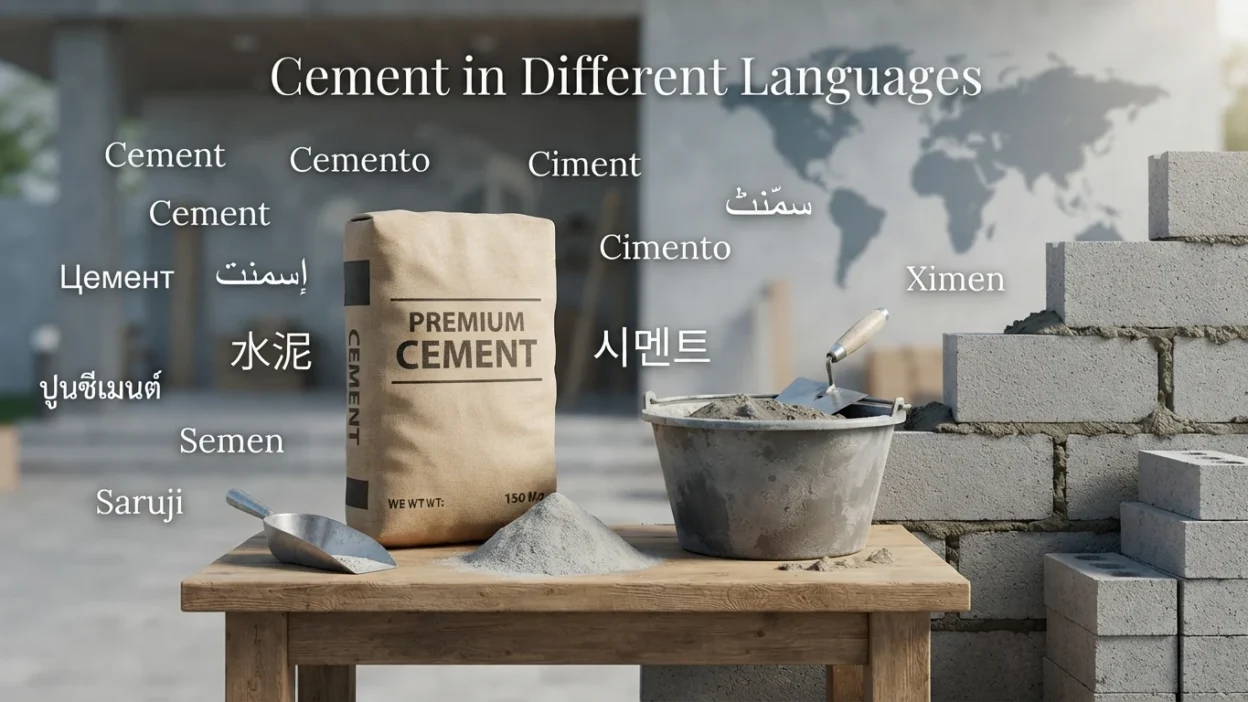
Cement is one of the most important materials used in modern construction. It helps make concrete, mortar, foundations, walls, roads, bridges, and many other structures. But how do people around the world say “cement” in their own languages?
If you are looking for cement in different languages, this guide gives you useful translations with native spellings, easy English pronunciations, and simple real-life examples. It is helpful for language learners, travelers, students, builders, translators, and anyone interested in construction vocabulary.
The word is often similar across many languages because “cement” has an international technical vocabulary. However, pronunciation, spelling, and grammatical usage can vary from one language to another.
Cement in Different Languages
| Language | Native Phrase | Easy English Pronunciation | Example Sentence | English Meaning |
| English | Cement | sih-MENT | We need more cement. | We need more cement. |
| Spanish | Cemento | seh-MEN-toh | Necesitamos más cemento. | We need more cement. |
| French | Ciment | see-MAHN | Nous avons besoin de plus de ciment. | We need more cement. |
| German | Zement | tseh-MENT | Wir brauchen mehr Zement. | We need more cement. |
| Italian | Cemento | cheh-MEN-toh | Abbiamo bisogno di altro cemento. | We need more cement. |
| Portuguese | Cimento | see-MEN-toh | Precisamos de mais cimento. | We need more cement. |
| Dutch | Cement | seh-MENT | We hebben meer cement nodig. | We need more cement. |
| Swedish | Cement | seh-MENT | Vi behöver mer cement. | We need more cement. |
| Danish | Cement | seh-MENT | Vi har brug for mere cement. | We need more cement. |
| Norwegian | Sement | seh-MENT | Vi trenger mer sement. | We need more cement. |
| Finnish | Sementti | seh-MENT-tee | Tarvitsemme lisää sementtiä. | We need more cement. |
| Icelandic | Sement | seh-MENT | Við þurfum meira sement. | We need more cement. |
| Irish | Stroighin | STROH-in | Teastaíonn níos mó stroighne uainn. | We need more cement. |
| Welsh | Sment | SMENT | Mae angen mwy o sment arnom. | We need more cement. |
| Scottish Gaelic | Saimeant | SAH-ment | Feumaidh sinn barrachd saimeant. | We need more cement. |
| Latin | Caementum | kai-MEN-toom | Plus caementi nobis opus est. | We need more cement. |
| Romanian | Ciment | chee-MENT | Avem nevoie de mai mult ciment. | We need more cement. |
| Greek | Τσιμέντο | tsee-MEN-toh | Χρειαζόμαστε περισσότερο τσιμέντο. | We need more cement. |
| Albanian | Çimento | chee-MEN-toh | Na duhet më shumë çimento. | We need more cement. |
| Basque | Zementu | seh-MEN-too | Zementu gehiago behar dugu. | We need more cement. |
| Catalan | Ciment | see-MENT | Necessitem més ciment. | We need more cement. |
| Galician | Cemento | seh-MEN-toh | Necesitamos máis cemento. | We need more cement. |
| Polish | Cement | TSEH-ment | Potrzebujemy więcej cementu. | We need more cement. |
| Czech | Cement | TSEH-ment | Potřebujeme více cementu. | We need more cement. |
| Slovak | Cement | TSEH-ment | Potrebujeme viac cementu. | We need more cement. |
| Slovenian | Cement | TSEH-ment | Potrebujemo več cementa. | We need more cement. |
| Croatian | Cement | TSEH-ment | Trebamo više cementa. | We need more cement. |
| Serbian | Цемент | TSEH-ment | Треба нам више цемента. | We need more cement. |
| Bulgarian | Цимент | TSEE-ment | Нуждаем се от повече цимент. | We need more cement. |
| Macedonian | Цемент | TSEH-ment | Ни треба повеќе цемент. | We need more cement. |
| Russian | Цемент | tseh-MYENT | Нам нужно больше цемента. | We need more cement. |
| Ukrainian | Цемент | tseh-MENT | Нам потрібно більше цементу. | We need more cement. |
| Belarusian | Цэмент | tseh-MENT | Нам трэба больш цэменту. | We need more cement. |
| Lithuanian | Cementas | tseh-MEN-tas | Mums reikia daugiau cemento. | We need more cement. |
| Latvian | Cements | TSEH-ments | Mums vajag vairāk cementa. | We need more cement. |
| Estonian | Tsement | TSEH-ment | Meil on rohkem tsementi vaja. | We need more cement. |
| Hungarian | Cement | TSEH-ment | Több cementre van szükségünk. | We need more cement. |
| Turkish | Çimento | chee-MEN-toh | Daha fazla çimentoya ihtiyacımız var. | We need more cement. |
| Azerbaijani | Sement | seh-MENT | Bizə daha çox sement lazımdır. | We need more cement. |
| Armenian | Ցեմենտ | tseh-MENT | Մեզ ավելի շատ ցեմենտ է պետք։ | We need more cement. |
| Georgian | ცემენტი | tseh-MEN-tee | მეტი ცემენტი გვჭირდება. | We need more cement. |
| Persian | سیمان | see-MAAN | ما به سیمان بیشتری نیاز داریم. | We need more cement. |
| Arabic | إسمنت | is-MENT | نحتاج إلى المزيد من الإسمنت. | We need more cement. |
| Hebrew | מלט | MEH-let | אנחנו צריכים יותר מלט. | We need more cement. |
| Urdu | سیمنٹ | seh-MENT | ہمیں مزید سیمنٹ چاہیے۔ | We need more cement. |
| Hindi | सीमेंट | see-MENT | हमें और सीमेंट चाहिए। | We need more cement. |
| Bengali | সিমেন্ট | see-MENT | আমাদের আরও সিমেন্ট দরকার। | We need more cement. |
| Punjabi | ਸੀਮਿੰਟ | see-MINT | ਸਾਨੂੰ ਹੋਰ ਸੀਮਿੰਟ ਚਾਹੀਦਾ ਹੈ। | We need more cement. |
| Gujarati | સિમેન્ટ | see-MENT | અમને વધુ સિમેન્ટ જોઈએ છે. | We need more cement. |
| Marathi | सिमेंट | see-MENT | आम्हाला आणखी सिमेंट हवे आहे. | We need more cement. |
| Nepali | सिमेन्ट | see-MENT | हामीलाई अझ सिमेन्ट चाहिन्छ। | We need more cement. |
| Sinhala | සිමෙන්ති | see-MEN-thee | අපට තවත් සිමෙන්ති අවශ්යයි. | We need more cement. |
| Tamil | சிமெண்டு | see-MEN-doo | எங்களுக்கு மேலும் சிமெண்டு தேவை. | We need more cement. |
| Telugu | సిమెంట్ | see-MENT | మాకు మరింత సిమెంట్ కావాలి. | We need more cement. |
| Kannada | ಸಿಮೆಂಟ್ | see-MENT | ನಮಗೆ ಹೆಚ್ಚು ಸಿಮೆಂಟ್ ಬೇಕು. | We need more cement. |
| Malayalam | സിമന്റ് | see-MENT | ഞങ്ങൾക്ക് കൂടുതൽ സിമന്റ് വേണം. | We need more cement. |
| Odia | ସିମେଣ୍ଟ | see-MENT | ଆମକୁ ଅଧିକ ସିମେଣ୍ଟ ଦରକାର। | We need more cement. |
| Assamese | চিমেণ্ট | see-MENT | আমাক অধিক চিমেণ্ট লাগে। | We need more cement. |
| Chinese | 水泥 | SHWAY-nee | 我们需要更多水泥。 | We need more cement. |
| Japanese | セメント | seh-MEN-toh | もっとセメントが必要です。 | We need more cement. |
| Korean | 시멘트 | shee-MEN-teu | 시멘트가 더 필요해요. | We need more cement. |
| Vietnamese | Xi măng | see-MAHNG | Chúng tôi cần thêm xi măng. | We need more cement. |
| Thai | ปูนซีเมนต์ | poon-see-MEN | เราต้องการปูนซีเมนต์เพิ่ม | We need more cement. |
| Indonesian | Semen | SEH-men | Kami membutuhkan lebih banyak semen. | We need more cement. |
| Malay | Simen | SEE-men | Kami memerlukan lebih banyak simen. | We need more cement. |
| Filipino | Semento | seh-MEN-toh | Kailangan namin ng mas maraming semento. | We need more cement. |
| Swahili | Saruji | sah-ROO-jee | Tunahitaji saruji zaidi. | We need more cement. |
| Afrikaans | Sement | seh-MENT | Ons het meer sement nodig. | We need more cement. |
| Zulu | Usimende | oo-see-MEN-deh | Sidinga usimende owengeziwe. | We need more cement. |
| Xhosa | Isamente | ee-sah-MEN-teh | Sifuna isamente eninzi. | We need more cement. |
| Amharic | ሲሚንቶ | see-MEEN-toh | ተጨማሪ ሲሚንቶ እንፈልጋለን። | We need more cement. |
| Somali | Sibidh | see-BIDH | Waxaan u baahanahay sibidh badan. | We need more cement. |
How to Say Cement in Different Languages
If you are searching for how to say cement in different languages, you will notice that many European languages have similar-looking words. Spanish uses cemento, Italian uses cemento, Portuguese uses cimento, and French uses ciment.
Other languages have completely different terms. Mandarin Chinese uses 水泥 (shuǐní), Persian uses سیمان (simān), and Swahili uses saruji.
These differences make cement in different languages translations particularly interesting for anyone studying construction vocabulary.
Cement in Different Languages Around the World
Cement is used in construction projects across the world, from homes and apartment buildings to roads, bridges, dams, and other infrastructure.
The vocabulary can vary significantly between regions. Some languages preserve words related to international terminology, while others use completely different native terms.
For example, Chinese uses 水泥, which literally refers to a material associated with water and mud, while Arabic commonly uses إسمنت, a form related to the international word “cement.”
Cement Translations in European Languages
Many European languages use words that sound similar to the English term.
Spanish has cemento, Italian has cemento, and Portuguese uses cimento. French uses ciment, while German uses Zement.
Slavic languages also have similar forms, including cement in Polish, Czech, Slovak, and Slovenian, with grammatical endings changing according to the sentence.
Cement Translations in Asian Languages
Asian languages show a wider range of vocabulary.
Chinese uses 水泥, Japanese uses the loanword セメント, and Korean uses 시멘트. Vietnamese uses xi măng, while Indonesian uses semen and Malay uses simen.
In South Asia, many languages use forms derived from the international word, including سیمنٹ in Urdu, सीमेंट in Hindi, ਸੀਮਿੰਟ in Punjabi, and সিমেন্ট in Bengali.
Cement vs. Concrete: What Is the Difference?
Cement and concrete are related, but they are not the same thing.
Cement is a binding material used as an ingredient in concrete. Concrete is a mixture that generally contains cement, water, and aggregates such as sand and gravel.
This distinction is important when learning cement in different languages, because some everyday conversations may use the words loosely even though they have different technical meanings.
Why Is Cement Important in Construction?
Cement plays an important role in modern construction because it binds other materials together.
It is widely used in concrete, mortar, plastering, foundations, masonry, and infrastructure projects. Its strength and versatility make it one of the most widely used construction materials.
Learning the word for cement in another language can therefore be useful for anyone working, studying, or communicating in international construction environments.
Why Learn Cement in Different Languages?
Learning construction vocabulary can make communication easier in multilingual environments.
Knowing how to say “cement” can help you:
- Communicate with workers and contractors.
- Understand construction-related conversations.
- Build technical vocabulary.
- Travel or work in another country.
- Read basic construction information.
- Improve your language-learning skills.
- Compare words across different languages.
Conclusion
The word “cement” has many fascinating translations around the world. While European languages often use words that resemble the English term, languages such as Chinese, Persian, Hebrew, and Swahili use distinctly different expressions.
This collection of cement in different languages translations gives you a practical reference for learning construction vocabulary and understanding how this important material is named around the world.
FAQs
What is cement in different languages?
“Cement” is translated as cemento in Spanish, ciment in French, Zement in German, цемент in Russian, سیمنٹ in Urdu, 水泥 in Chinese, and 시멘트 in Korean.
How do you say cement in 10 languages?
You can say cemento in Spanish, ciment in French, Zement in German, cimento in Portuguese, cement in Polish, çimento in Turkish, سیمان in Persian, سیمنٹ in Urdu, 水泥 in Chinese, and セメント in Japanese.
What is cement called in Asian languages?
Some examples include 水泥 in Chinese, セメント in Japanese, 시멘트 in Korean, xi măng in Vietnamese, ปูนซีเมนต์ in Thai, semen in Indonesian, and சிமெண்டு in Tamil.
Is cement the same as concrete?
No. Cement is a binding ingredient used to make concrete. Concrete usually contains cement, water, and aggregates such as sand and gravel.
Why are cement translations different across languages?
Languages develop technical vocabulary in different ways. Some borrow international terminology, while others use native words or expressions that developed independently.