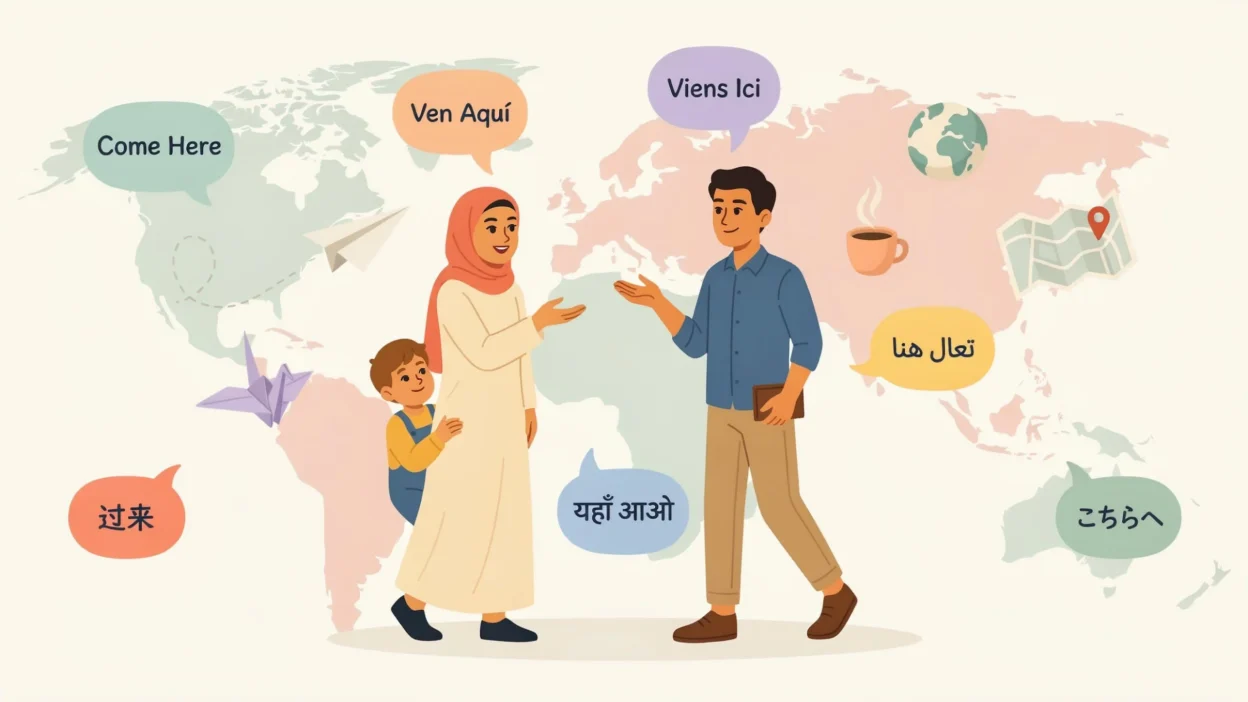
Whether you are learning a new language, travelling abroad, or simply looking for the right words to call someone closer, knowing how to say “come here” can be surprisingly useful. This simple phrase can sound friendly, polite, urgent, or even commanding depending on the language and situation.
In this guide, you will discover come here in different languages, including the native phrase, an easy English pronunciation, and a short example sentence. The table covers languages around the world, making it easy to compare translations and find the expression you need.
How to Say “Come Here” in Different Languages
“Come here” is usually an invitation or instruction asking someone to move towards the speaker. Some languages have different forms for formal and informal situations, while others change the phrase depending on whether you are speaking to one person or several people.
The translations below use common everyday expressions. Pronunciations are simplified for English speakers, so they are useful for learning but may not capture every sound perfectly.
Come Here in Different Languages
| Language | Native phrase | Easy English pronunciation | Example sentence | English meaning |
| English | Come here | kum heer | Come here, please. | Please come closer. |
| Spanish | Ven aquí | ben ah-KEE | Ven aquí, amigo. | Come here, my friend. |
| French | Viens ici | vyan ee-SEE | Viens ici, s’il te plaît. | Come here, please. |
| German | Komm her | kom hair | Komm her, bitte. | Come here, please. |
| Italian | Vieni qui | VYEH-nee kwee | Vieni qui, per favore. | Come here, please. |
| Portuguese | Venha aqui | VEN-yah ah-KEE | Venha aqui, por favor. | Come here, please. |
| Dutch | Kom hier | kom heer | Kom hier, alsjeblieft. | Come here, please. |
| Afrikaans | Kom hier | kom heer | Kom hier, asseblief. | Come here, please. |
| Swedish | Kom hit | kom heet | Kom hit en stund. | Come here for a moment. |
| Norwegian | Kom hit | kom heet | Kom hit, er du snill. | Come here, please. |
| Danish | Kom her | kom hair | Kom her et øjeblik. | Come here for a moment. |
| Finnish | Tule tänne | TOO-leh TAN-neh | Tule tänne, kiitos. | Come here, please. |
| Estonian | Tule siia | TOO-leh SEE-ah | Tule siia korraks. | Come here for a moment. |
| Latvian | Nāc šeit | naats shayt | Nāc šeit, lūdzu. | Come here, please. |
| Lithuanian | Ateik čia | ah-TAYK chyah | Ateik čia, prašau. | Come here, please. |
| Polish | Chodź tutaj | hotch TOO-tie | Chodź tutaj, proszę. | Come here, please. |
| Czech | Pojď sem | poyt sem | Pojď sem, prosím. | Come here, please. |
| Slovak | Poď sem | poot sem | Poď sem, prosím. | Come here, please. |
| Slovenian | Pridi sem | PREE-dee sem | Pridi sem za trenutek. | Come here for a moment. |
| Croatian | Dođi ovamo | DOH-jee oh-VAH-moh | Dođi ovamo, molim te. | Come here, please. |
| Serbian | Дођи овамо | DOH-jee oh-VAH-moh | Дођи овамо, молим те. | Come here, please. |
| Bosnian | Dođi ovamo | DOH-jee oh-VAH-moh | Dođi ovamo, molim te. | Come here, please. |
| Bulgarian | Ела тук | EH-lah took | Ела тук, моля те. | Come here, please. |
| Macedonian | Дојди овде | DOY-dee OV-deh | Дојди овде, те молам. | Come here, please. |
| Russian | Иди сюда | ee-DEE soo-DAH | Иди сюда, пожалуйста. | Come here, please. |
| Ukrainian | Іди сюди | ee-DEE soo-DEE | Іди сюди, будь ласка. | Come here, please. |
| Belarusian | Ідзі сюды | ee-DZEE soo-DEE | Ідзі сюды, калі ласка. | Come here, please. |
| Greek | Έλα εδώ | EH-lah eh-THOH | Έλα εδώ, σε παρακαλώ. | Come here, please. |
| Albanian | Eja këtu | EH-yah kuh-TOO | Eja këtu, të lutem. | Come here, please. |
| Romanian | Vino aici | VEE-noh ah-EECH | Vino aici, te rog. | Come here, please. |
| Hungarian | Gyere ide | DYER-eh EE-deh | Gyere ide, kérlek. | Come here, please. |
| Turkish | Buraya gel | boo-RAH-yah gel | Buraya gel, lütfen. | Come here, please. |
| Azerbaijani | Bura gəl | boo-RAH gel | Bura gəl, zəhmət olmasa. | Come here, please. |
| Georgian | აქ მოდი | ak MOH-dee | აქ მოდი, გთხოვ. | Come here, please. |
| Armenian | Արի այստեղ | ah-REE ahys-TEGH | Արի այստեղ, խնդրում եմ։ | Come here, please. |
| Persian | بیا اینجا | bee-YAH een-JAH | بیا اینجا، لطفاً. | Come here, please. |
| Urdu | یہاں آؤ | yah-HAAN aao | یہاں آؤ، براہِ کرم۔ | Come here, please. |
| Hindi | यहाँ आओ | yah-HAAN aa-oh | यहाँ आओ, कृपया। | Come here, please. |
| Bengali | এখানে এসো | eh-KHAH-neh EH-sho | এখানে এসো, দয়া করে। | Come here, please. |
| Punjabi | ਇੱਥੇ ਆਓ | it-thay aa-oh | ਇੱਥੇ ਆਓ, ਕਿਰਪਾ ਕਰਕੇ। | Come here, please. |
| Gujarati | અહીં આવો | ah-HEEN aa-voh | અહીં આવો, કૃપા કરીને. | Come here, please. |
| Marathi | इथे या | ee-THEH yah | इथे या, कृपया. | Come here, please. |
| Nepali | यहाँ आऊ | yah-HAAN aa-oo | यहाँ आऊ, कृपया। | Come here, please. |
| Sinhala | මෙහාට එන්න | meh-HAAT en-nah | මෙහාට එන්න, කරුණාකර. | Come here, please. |
| Tamil | இங்கே வா | ING-gay vah | இங்கே வா, தயவுசெய்து. | Come here, please. |
| Telugu | ఇక్కడికి రా | ee-KAH-dee-kee rah | ఇక్కడికి రా, దయచేసి. | Come here, please. |
| Kannada | ಇಲ್ಲಿಗೆ ಬಾ | il-LEE-geh bah | ಇಲ್ಲಿಗೆ ಬಾ, ದಯವಿಟ್ಟು. | Come here, please. |
| Malayalam | ഇവിടെ വാ | ee-VEE-deh vah | ഇവിടെ വാ, ദയവായി. | Come here, please. |
| Odia | ଏଠାକୁ ଆସ | ay-THAH-koo ahs | ଏଠାକୁ ଆସ, ଦୟାକରି। | Come here, please. |
| Assamese | ইয়ালৈ আহা | yah-LIE ah-HAH | ইয়ালৈ আহা, অনুগ্ৰহ কৰি। | Come here, please. |
| Chinese (Mandarin) | 过来 | gwoh-LIE | 过来,请。 | Come here, please. |
| Japanese | ここに来て | koh-koh nee KEE-teh | ここに来てください。 | Please come here. |
| Korean | 여기 와 | yuh-gee wah | 여기 와 주세요. | Please come here. |
| Vietnamese | Lại đây | lie day | Lại đây, làm ơn. | Come here, please. |
| Thai | มานี่ | mah-NEE | มานี่หน่อย | Come here for a moment. |
| Indonesian | Kemari | kuh-MAH-ree | Kemari sebentar. | Come here for a moment. |
| Malay | Mari sini | MAH-ree SEE-nee | Mari sini, sila. | Come here, please. |
| Filipino | Halika rito | hah-LEE-kah REE-toh | Halika rito, pakiusap. | Come here, please. |
| Khmer | មកទីនេះ | mok tee NISS | មកទីនេះ សូម | Come here, please. |
| Lao | ມານີ້ | mah NEE | ມານີ້, ກະລຸນາ. | Come here, please. |
| Burmese | ဒီကိုလာ | dee-koh lah | ဒီကိုလာပါ။ | Please come here. |
| Mongolian | Нааш ир | nahsh eer | Нааш ир, гуйя. | Come here, please. |
| Kazakh | Мұнда кел | moon-DAH kel | Мұнда келіңіз, өтінемін. | Please come here. |
| Kyrgyz | Бул жакка кел | bool JAHK-kah kel | Бул жакка кел, суранам. | Come here, please. |
| Uzbek | Bu yerga kel | boo YER-gah kel | Bu yerga keling, iltimos. | Please come here. |
| Tajik | Ин ҷо биё | een joh bee-YOH | Ин ҷо биё, лутфан. | Come here, please. |
| Turkmen | Bu ýere gel | boo YEH-reh gel | Bu ýere geliň, haýyş. | Please come here. |
| Arabic | تعال هنا | ta-AAL HOO-nah | تعال هنا، من فضلك. | Come here, please. |
| Hebrew | בוא הנה | boh HAY-nah | בוא הנה, בבקשה. | Come here, please. |
| Swahili | Njoo hapa | njoh-OO HAH-pah | Njoo hapa, tafadhali. | Come here, please. |
| Amharic | እዚህ ና | iz-EEH nah | እዚህ ና፣ እባክህ። | Come here, please. |
| Somali | Halkan kaalay | HAL-kan kah-LIE | Halkan kaalay, fadlan. | Come here, please. |
| Zulu | Woza lapha | WOH-zah LAH-pah | Woza lapha, ngiyacela. | Come here, please. |
| Xhosa | Yiza apha | YEE-zah AH-pah | Yiza apha, ndiyacela. | Come here, please. |
| Malagasy | Avia aty | ah-VEE-ah ah-TEE | Avia aty, azafady. | Come here, please. |
| Māori | Haere mai ki konei | HIGH-reh my kee koh-NAY | Haere mai ki konei. | Come here. |
Understanding “Come Here” Around the World
The phrase “come here” is simple, but its tone can change from one language to another. In many languages, the same expression can sound friendly when spoken gently and more forceful when spoken sharply.
Informal and Polite Forms
Some languages use separate forms when speaking to friends, children, strangers, or people who deserve respect. For example, Hindi, Urdu, Japanese, and Korean can change the expression depending on the relationship between the speakers.
If you are unsure which form to use, a polite expression is usually the safest choice. Adding a word such as “please” can make the request sound more welcoming.
How to Use “Come Here” in Real Life
You might use this phrase when calling a friend, asking someone to look at something, or inviting a person to join you. The situation helps determine whether the expression should sound casual, warm, or urgent.
For example, you could say “come here” when you want to show someone a photograph, ask for help, or call a child who has wandered away. In a friendly setting, it can be a simple invitation to move closer.
Why Learn “Come Here” in Different Languages?
Learning everyday phrases is a useful way to build confidence in a new language. You can practise these expressions while travelling, meeting international friends, or exploring different cultures.
This list of come here translations also shows how languages use different words and sentence structures to express the same basic idea. Comparing them can make language learning more interesting and memorable.
Tips for Pronouncing “Come Here” Correctly
- Listen to native speakers: Hearing the phrase helps you understand its natural rhythm.
- Practise slowly: Say each word separately before joining the phrase together.
- Pay attention to tone: A friendly tone can make the same words sound much more welcoming.
- Learn the polite form: This is especially useful when speaking to strangers or older people.
- Use the phrase in context: A short sentence is often easier to remember than a word alone.
Conclusion
Learning come here in different languages is a useful way to practise everyday communication and discover how people around the world express simple invitations. Whether you need a phrase for travel, conversation, or language study, these translations give you a helpful starting point. Remember to consider the situation and choose a polite form when you are unsure.
FAQs
1. How do you say “come here” in different languages?
You can say “come here” in many ways, such as “ven aquí” in Spanish, “viens ici” in French, “komm her” in German, and “vieni qui” in Italian. The exact expression depends on the language and the level of politeness.
2. What is the easiest way to learn “come here” in all languages?
Start by learning a few common languages, then practise the native phrase and pronunciation together. Repeating the expression in a short real-life sentence can help you remember it more easily.
3. Is “come here” the same in every language?
No. Some languages use different forms for formal and informal situations, while others change the phrase depending on who is being addressed. The meaning is similar, but the wording and tone can vary.
4. Why is “come here” useful when travelling?
It is a practical everyday phrase that can help you call someone closer, ask for attention, or invite a person to join you. Learning it can make basic communication easier in unfamiliar places.
5. Can I use these “come here” translations with anyone?
Not always. Some expressions are informal or direct, so it is important to consider the relationship and situation. When speaking to strangers or in formal settings, choose a polite version where available.