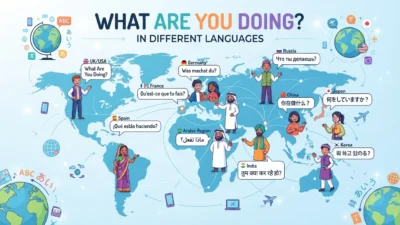
Love is a universal emotion, but every culture expresses it in its own unique and beautiful way. Learning I love you in different languages is more than just memorizing romantic phrases—it’s a meaningful way to connect with people, appreciate different cultures, and express genuine affection. Whether you’re speaking to your partner, family member, close friend, or someone special from another country, saying “I love you” in their native language can make your words even more heartfelt.
Around the world, the phrase “I love you” carries deep emotional significance. Some languages use simple, direct expressions, while others include poetic words that reflect centuries of culture and tradition. By learning these translations, you’ll not only expand your language skills but also discover how love is communicated across different countries and communities.
In today’s global world, knowing I love you in different languages is useful for travelers, language learners, international couples, and anyone interested in world cultures. Whether you’re writing a Valentine’s Day card, sending a heartfelt message, celebrating an anniversary, or simply surprising someone special, expressing love in another language creates a memorable and personal touch.
In this complete guide, you’ll discover I love you in different languages in all languages, learn how to say I love you in different languages, explore accurate I love you translations, and see how love is expressed around the world. Every language includes the correct native phrase, an easy English pronunciation, a practical example sentence, and its English meaning, making this guide suitable for beginners and advanced learners alike.
By the end of this article, you’ll have a valuable collection of multilingual love expressions that you can confidently use in conversations, greeting cards, special occasions, or while learning new languages.
Why Learn “I Love You” in Different Languages?
Learning I love you in different languages is a wonderful way to improve your language skills while expressing one of the most meaningful emotions. Whether you’re communicating with loved ones, traveling abroad, or exploring new cultures, these phrases help create stronger and more personal connections.
Here are some of the biggest benefits of learning these expressions:
- Express your feelings in a unique and memorable way.
- Surprise your partner with a romantic phrase in their native language.
- Strengthen relationships with international friends and loved ones.
- Improve your vocabulary with one of the world’s most common expressions.
- Learn about different cultures and traditions surrounding love.
- Build confidence while practicing foreign languages.
- Make greeting cards, messages, and special occasions more meaningful.
Even if you’re just beginning to learn a new language, “I love you” is one of the first and most memorable phrases you’ll want to know.
What You’ll Find in This Guide
This guide is designed to be a complete resource for anyone searching for I love you in different languages.
Inside this article, you’ll discover:
- Correct native spellings for every phrase.
- Easy English pronunciations.
- Practical real-life example sentences.
- English meanings for every example.
- Helpful pronunciation tips.
- Cultural insights into how love is expressed around the world.
- Easy techniques for remembering multilingual love phrases.
- Answers to the most frequently asked questions.
Whether you’re a traveler, language learner, student, teacher, or simply someone who loves discovering new cultures, this guide will help you confidently express love in dozens of languages while gaining a deeper appreciation for the diversity of human expression.
I Love You in Different Languages
| Language | Native Phrase | Easy English Pronunciation | Example Sentence | English Meaning |
| English | I love you | Eye Love You | I love you with all my heart. | I love you with all my heart. |
| Spanish | Te amo | Tay AH-mo | Te amo para siempre. | I love you forever. |
| French | Je t’aime | Zhuh Tem | Je t’aime beaucoup. | I love you very much. |
| German | Ich liebe dich | Ish LEE-buh Dikh | Ich liebe dich von ganzem Herzen. | I love you with all my heart. |
| Italian | Ti amo | Tee AH-mo | Ti amo tanto. | I love you so much. |
| Portuguese | Eu te amo | Eh-oo Che AH-mo | Eu te amo para sempre. | I love you forever. |
| Dutch | Ik hou van jou | Ik How Van Yow | Ik hou van jou. | I love you. |
| Swedish | Jag älskar dig | Yahg EL-skar Day | Jag älskar dig. | I love you. |
| Norwegian | Jeg elsker deg | Yai EL-sker Dai | Jeg elsker deg. | I love you. |
| Danish | Jeg elsker dig | Yai EL-sker Die | Jeg elsker dig. | I love you. |
| Finnish | Minä rakastan sinua | Mee-na RA-kas-tan See-noo-ah | Minä rakastan sinua. | I love you. |
| Icelandic | Ég elska þig | Yek EL-ska Thig | Ég elska þig. | I love you. |
| Irish | Is breá liom tú | Iss Bra Lee-um Too | Is breá liom tú. | I love you. |
| Welsh | Rwy’n dy garu di | Roo-in Dee GAR-ee Dee | Rwy’n dy garu di. | I love you. |
| Scottish Gaelic | Tha gaol agam ort | Ha Gool A-gam Ort | Tha gaol agam ort. | I love you. |
| Polish | Kocham cię | KO-ham Che | Kocham cię bardzo. | I love you very much. |
| Czech | Miluji tě | MEE-loo-yee Tyeh | Miluji tě. | I love you. |
| Slovak | Ľúbim ťa | LOO-bim Tya | Ľúbim ťa. | I love you. |
| Slovenian | Ljubim te | Lyoo-beem Te | Ljubim te. | I love you. |
| Croatian | Volim te | VO-lim Te | Volim te svim srcem. | I love you with all my heart. |
| Serbian | Волим те | VO-lim Te | Волим те. | I love you. |
| Bosnian | Volim te | VO-lim Te | Volim te. | I love you. |
| Romanian | Te iubesc | Te Yoo-BESK | Te iubesc mult. | I love you very much. |
| Hungarian | Szeretlek | SE-ret-lek | Szeretlek. | I love you. |
| Greek | Σ’ αγαπώ | Sa A-ga-PO | Σ’ αγαπώ πολύ. | I love you very much. |
| Russian | Я тебя люблю | Ya Te-BYA Lyu-BLYU | Я тебя люблю. | I love you. |
| Ukrainian | Я тебе кохаю | Ya Te-be Ko-HA-yu | Я тебе кохаю. | I love you. |
| Belarusian | Я цябе кахаю | Ya Tsya-BYE Ka-HA-yu | Я цябе кахаю. | I love you. |
| Bulgarian | Обичам те | O-bee-CHAM Te | Обичам те. | I love you. |
| Macedonian | Те сакам | Te SA-kam | Те сакам. | I love you. |
| Albanian | Të dua | Te DOO-ah | Të dua shumë. | I love you very much. |
| Turkish | Seni seviyorum | Se-ni Sev-ee-YO-rum | Seni seviyorum. | I love you. |
| Arabic | أحبك | Uhibbuk | أحبك كثيرًا | I love you very much. |
| Persian (Farsi) | دوستت دارم | Dooset Daram | دوستت دارم | I love you. |
| Hebrew | אני אוהב אותך | Ani Ohev Otkha | אני אוהב אותך | I love you. |
| Hindi | मैं तुमसे प्यार करता हूँ | Main Tumse Pyar Karta Hoon | मैं तुमसे प्यार करता हूँ। | I love you. |
| Urdu | میں تم سے محبت کرتا ہوں | Main Tum Se Mohabbat Karta Hoon | میں تم سے محبت کرتا ہوں۔ | I love you. |
| Punjabi | ਮੈਂ ਤੈਨੂੰ ਪਿਆਰ ਕਰਦਾ ਹਾਂ | Main Tainu Pyar Karda Haan | ਮੈਂ ਤੈਨੂੰ ਪਿਆਰ ਕਰਦਾ ਹਾਂ। | I love you. |
| Bengali | আমি তোমাকে ভালোবাসি | Ami Tomake Bhalobashi | আমি তোমাকে ভালোবাসি। | I love you. |
| Gujarati | હું તને પ્રેમ કરું છું | Hun Tane Prem Karun Chhu | હું તને પ્રેમ કરું છું. | I love you. |
| Marathi | मी तुझ्यावर प्रेम करतो | Mee Tujhyavar Prem Karto | मी तुझ्यावर प्रेम करतो. | I love you. |
| Nepali | म तिमीलाई माया गर्छु | Ma Timilai Maya Garchhu | म तिमीलाई माया गर्छु। | I love you. |
| Sinhala | මම ඔයාට ආදරෙයි | Mama Oyata Adarei | මම ඔයාට ආදරෙයි. | I love you. |
| Tamil | நான் உன்னை காதலிக்கிறேன் | Naan Unnai Kaadhalikkiren | நான் உன்னை காதலிக்கிறேன். | I love you. |
| Telugu | నేను నిన్ను ప్రేమిస్తున్నాను | Nenu Ninnu Preminchutunnanu | నేను నిన్ను ప్రేమిస్తున్నాను. | I love you. |
| Kannada | ನಾನು ನಿನ್ನನ್ನು ಪ್ರೀತಿಸುತ್ತೇನೆ | Naanu Ninnannu Preetisuttene | ನಾನು ನಿನ್ನನ್ನು ಪ್ರೀತಿಸುತ್ತೇನೆ. | I love you. |
| Malayalam | ഞാൻ നിന്നെ സ്നേഹിക്കുന്നു | Njan Ninne Snehikkunnu | ഞാൻ നിന്നെ സ്നേഹിക്കുന്നു. | I love you. |
| Thai | ฉันรักคุณ | Chan Rak Khun | ฉันรักคุณ | I love you. |
| Vietnamese | Anh yêu em | Anh Yeeu Em | Anh yêu em. | I love you. |
| Indonesian | Aku cinta kamu | A-ku Chin-ta Ka-mu | Aku cinta kamu. | I love you. |
| Malay | Saya cinta awak | Sa-ya Chin-ta A-wak | Saya cinta awak. | I love you. |
| Filipino (Tagalog) | Mahal kita | Ma-hal Ki-ta | Mahal kita. | I love you. |
| Chinese (Mandarin) | 我爱你 | Wo Ai Ni | 我爱你! | I love you! |
| Japanese | 愛しています | Ai Shiteimasu | 愛しています。 | I love you. |
| Korean | 사랑해 | Sa-rang-hae | 사랑해! | I love you! |
| Mongolian | Би чамд хайртай | Bee Chamd Hair-tai | Би чамд хайртай. | I love you. |
| Khmer | ខ្ញុំស្រឡាញ់អ្នក | Khnyom Srolanh Neak | ខ្ញុំស្រឡាញ់អ្នក | I love you. |
| Lao | ຂ້ອຍຮັກເຈົ້າ | Khoy Hak Chao | ຂ້ອຍຮັກເຈົ້າ | I love you. |
| Burmese | မင်းကိုချစ်တယ် | Min Ko Chit Tal | မင်းကိုချစ်တယ် | I love you. |
| Swahili | Nakupenda | Na-ku-PEN-da | Nakupenda sana. | I love you very much. |
| Zulu | Ngiyakuthanda | Ngee-ya-ku-THAN-da | Ngiyakuthanda. | I love you. |
| Xhosa | Ndiyakuthanda | Ndee-ya-ku-THAN-da | Ndiyakuthanda. | I love you. |
| Afrikaans | Ek is lief vir jou | Ek Is Leef Fer Yo | Ek is lief vir jou. | I love you. |
| Hausa | Ina son ka | Ee-na Son Ka | Ina son ka. | I love you. |
| Amharic | እወድሃለሁ | Ewedihalehu | እወድሃለሁ | I love you. |
| Somali | Waan ku jeclahay | Waan Ku Je-cla-hay | Waan ku jeclahay. | I love you. |
| Estonian | Ma armastan sind | Ma Ar-mas-tan Sind | Ma armastan sind. | I love you. |
| Latvian | Es tevi mīlu | Es Te-vi Mee-loo | Es tevi mīlu. | I love you. |
| Lithuanian | Aš tave myliu | Ash Ta-ve Mee-lyu | Aš tave myliu. | I love you. |
| Esperanto | Mi amas vin | Mee A-mas Vin | Mi amas vin. | I love you. |
How to Say “I Love You” in Different Languages
Learning how to say “I love you” in different languages is a meaningful way to express your feelings while connecting with people from different cultures. Whether you’re speaking to your partner, family, close friends, or someone special, saying these three words in their native language can make your message even more heartfelt.
Although every language has its own pronunciation and writing system, the meaning remains universal. It expresses affection, care, appreciation, and deep emotional connection.
Here are a few simple tips to help you pronounce these love phrases correctly:
- Listen to native speakers whenever possible.
- Practice each phrase slowly before speaking naturally.
- Learn both the native script and pronunciation together.
- Repeat the phrases regularly to improve your confidence.
- Use the expressions naturally and sincerely.
With consistent practice, you’ll soon be able to express love confidently in many different languages.
Why Learn “I Love You” in Different Languages?
Learning I love you in different languages is useful for travelers, language learners, international couples, and anyone interested in world cultures.
Express Your Feelings More Personally
Saying “I love you” in someone’s native language makes your message feel thoughtful, genuine, and memorable.
Strengthen International Relationships
Whether you’re in a long-distance relationship or have friends from different countries, speaking their language helps build stronger emotional connections.
Improve Your Language Skills
Love expressions are among the most memorable phrases to learn. They improve pronunciation while expanding your everyday vocabulary.
Appreciate Different Cultures
Different cultures express love in unique ways. Learning these phrases gives you a deeper understanding of traditions, customs, and communication styles around the world.
Make Special Occasions More Meaningful
These multilingual expressions are perfect for Valentine’s Day, anniversaries, birthdays, weddings, romantic letters, and heartfelt messages.
I Love You Around the World
Love is celebrated in every culture, but people express it in beautifully different ways.
Many European languages use short and direct expressions of love, while several Asian languages often emphasize respect and sincerity depending on the relationship. In the Middle East, love phrases are deeply rooted in poetic traditions, and African languages often express affection through warm and meaningful words that reflect strong family and community values.
No matter where you are, saying “I love you” in someone’s native language is a thoughtful gesture that can make your feelings even more special.
Tips for Remembering Foreign Love Phrases
Learning multilingual love expressions becomes easier with regular practice.
Try these simple techniques:
- Learn three to five new phrases each day.
- Create flashcards with the native phrase and pronunciation.
- Listen to native speakers to improve your accent.
- Practice speaking the phrases aloud every day.
- Group similar languages together.
- Use the expressions in greeting cards or messages.
- Review previously learned phrases weekly.
Consistent practice will help you remember these expressions naturally.
Conclusion
Learning I love you in different languages is a wonderful way to express affection while exploring the beauty of world languages and cultures. Whether you’re traveling, learning a new language, celebrating a special occasion, or simply surprising someone you care about, these multilingual expressions help you communicate your feelings with sincerity and warmth.
By practicing the native phrases, pronunciations, and example sentences in this guide, you’ll be able to express love confidently in dozens of languages and create lasting memories with people around the world.
FAQs
1. How do you say “I love you” in different languages?
Every language has its own expression for “I love you.” For example, Spanish says Te amo, French uses Je t’aime, German says Ich liebe dich, Italian says Ti amo, Japanese says 愛しています (Ai Shiteimasu), and Korean says 사랑해 (Saranghae).
2. Why should I learn “I love you” in different languages?
Learning these expressions helps you communicate with loved ones, appreciate different cultures, improve your language skills, and create more meaningful conversations.
3. Is “I love you” always used romantically?
Not always. In many cultures, expressions of love can also be used between close family members and, in some cases, close friends. The context and local customs determine how the phrase is used.
4. Can I use these translations in greeting cards or messages?
Yes. These translations are perfect for Valentine’s Day cards, anniversary messages, wedding wishes, birthday notes, romantic letters, and personal messages.
5. Which languages have the most famous ways to say “I love you”?
Some of the most well-known expressions include Te amo (Spanish), Je t’aime (French), Ti amo (Italian), Ich liebe dich (German), 我爱你 (Wǒ ài nǐ) (Chinese), and 사랑해 (Saranghae) (Korean).